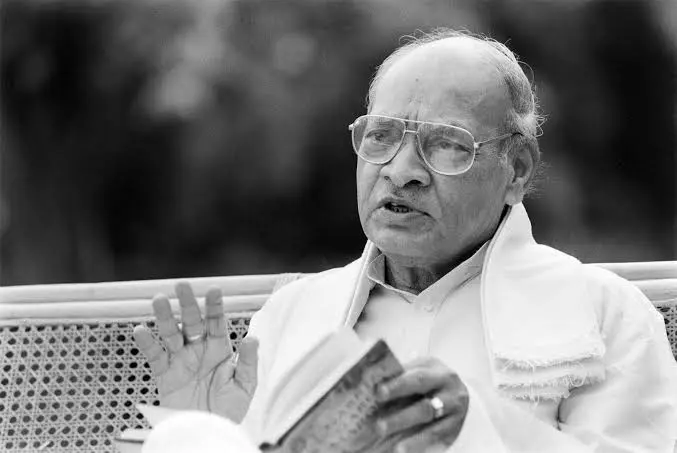
Today is P V Narasimha Rao’s birth anniversary
KARIMNAGAR, JUNE 28, 2026: Pamulaparthi Venkata (PV) Narasimha Rao was born on 28 June 1921 in a small village, Laknepalli of Narsampet Mandal, Warangal district, Telangana. His father, Sitarama Rao and mother, Rukma Bai, hailed from agriculture family. Later, he was adopted by Pamulaparthi Ranga Rao and Rukminamma from Vangara village of Bheemadevarapalli Mandal of Hanumakonda district. He completed his school education in Katkuru village. He studied a BA degree in Osmania University, a Law degree from Bombay University and a master’s degree in Law from Nagpur University. In the 1930s and 1940s, he participated in the freedom struggle against the Nizam of Hyderabad and also colonial rule.
Versatile Scholar, Freedom Fighter and Politician:
He was a distinguished freedom fighter, a member of the Indian National Congress, a versatile scholar, and the 9th Prime Minister of India(1991-96), widely celebrated as “The Father of Indian Economic Reforms”. He also served as Chief Minister of AP (1971-73), and held crucial positions in union cabinet as minister of Home, Defence, External Affairs before becoming PM. He was member of AP Legislative Assembly (1957-77,), member of parliament (1977-97), and Indian National Congress President (1991-96). He was the first person to serve as PM from South India and also from outside the Nehru-Gandhi family to complete his five year tenure.
Economic Reforms : LPG Policies:
After Rajiv Gandhi’s assassination, PV took the helm of a minority government. Along with Finance Minister Dr Manmohan Singh, he dismantled the licence raj and introduced the liberalisation, privatisation, and Globalisation (LPG) policies that saved India from financial bankruptcy. This policy transformed India from a heavily regulated, quasi-socialist structure to an open-market economy. He initiated the “Look East” policy to improve diplomatic and economic ties with Southeast Asia, while advancing India’s nuclear program. His premiership also navigated immense turbulence, mostly the Babri Masjid demolition in Ayodhya and the subsequent challenges to his leadership.
He was honoured posthumously with India’s highest civilian award, Bharat Ratna, in 2024 by the GoI. After retirement from politics, he published an autobiography titled “The Insider”. He was married to Satyamma and had three sons and five daughters. He took his last breath on 23 December 2004 at the age of 83 due to a heart attack.
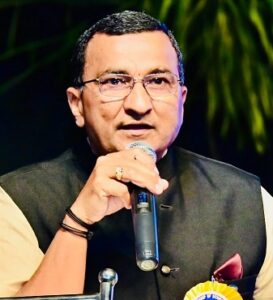
Authored Article by Prof Madhusudhan Reddy Burra,
Retired Government Degree College Principal
Mobile: 9949700037
About the Author