Appeal to Protect Jagtial’s Heritage Before Time Runs Out
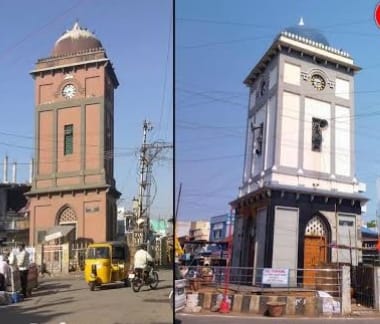
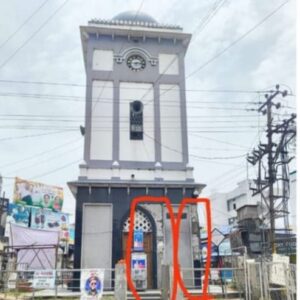
JAGTIAL, JULY 17, 2026: Every town has a symbol that defines its identity. For Hyderabad, it is Charminar. For Warangal, it is the Thousand Pillar Temple. For Jagtial, it is undoubtedly the Historic Clock Tower standing proudly in the heart of the town. For generations, this iconic structure has been more than a monument—it has been a witness to history, a guide to citizens, and a symbol of Jagtial’s pride.
Yet today, the Clock Tower stands neglected, surrounded by indifference rather than admiration. Citizens, historians, heritage lovers, and social activists have repeatedly appealed to public representatives and government officials for its preservation. Unfortunately, those appeals have largely gone unheard.
The History Behind the Clock Tower
The Jagtial Clock Tower was constructed during the early decades of the twentieth century when public clock towers served as important civic infrastructure. During that period, wristwatches were rare and expensive, and very few households possessed clocks.
The tower was established at a strategic location in the town center so that residents, traders, farmers, travelers, students, and government employees could know the correct time. The clock served as a public utility and became a focal point around which commercial and social activities revolved.
Though exact archival records regarding its construction require official verification, local historians believe the structure emerged during the period when Jagtial was evolving into an important administrative and commercial center in the region.
Why Was It Built?
The Clock Tower was not built merely for decoration. It served several important purposes:
Providing accurate public time before the era of personal watches and mobile phones.
Regulating market activities and business hours.
Helping farmers and traders coordinate transport and trade schedules.
Acting as a landmark for visitors entering the town.
Becoming a meeting point for social, cultural, and public gatherings.
At a time when communication facilities were limited, the clock tower functioned as a public service institution.
What Benefits Did It Offer in Earlier Times?
For older generations, the Clock Tower was an essential part of daily life.
Its clock guided:
Shop opening and closing times.
School and office schedules.
Market operations.
Public transportation timings.
Religious and social gatherings.
Many elderly residents still recall how the clock’s visibility from different parts of the town helped people manage their daily routines.
In an era without digital technology, the Clock Tower was effectively the town’s “public timekeeper.”
Jagtial: A Town Rich in Heritage
The importance of the Clock Tower cannot be understood without appreciating Jagtial’s historical significance.
Jagtial is home to the famous Jagtial Fort, one of Telangana’s unique military forts known for its European-style defensive design and moat system. The region has witnessed the rule of various dynasties and played a significant role during the Telangana peasant struggles.
The town has long been a center of agriculture, trade, education, and culture in northern Telangana. The Clock Tower became an enduring symbol of this growth and progress.
For decades, it appeared in family photographs, postcards, local publications, and public memories. To many residents, the Clock Tower is not merely a structure—it is an emotional connection to their childhood and heritage.
What Does It Mean Today?
In today’s digital age, nobody depends on the Clock Tower to know the time.
Mobile phones, smart watches, and electronic displays have replaced its original function.
However, its importance has not diminished.
Today, the Clock Tower serves a different purpose:
Preserving the town’s historical identity.
Educating future generations about local heritage.
Enhancing tourism potential.
Strengthening civic pride.
Connecting the present generation with the past.
Its value has shifted from utility to heritage.
A Disturbing Neglect
Despite its historical importance, the Clock Tower today reflects years of neglect.
Citizens frequently point out:
Inadequate maintenance.
Visual deterioration.
Lack of heritage protection measures.
Absence of proper illumination and beautification.
Failure to integrate the monument into tourism development plans.
Repeated appeals by concerned citizens have not resulted in meaningful restoration efforts.
The question remains:
Why should a landmark that represents the identity of an entire district be allowed to deteriorate?
What Must Be Done?
The restoration of the Clock Tower should become a priority project for the District Administration, Municipal Authorities, Tourism Department, Archaeology Department, and Public Representatives.
The following steps can be undertaken immediately:
Scientific structural assessment.
Restoration by heritage conservation experts.
Repair and functioning of the historic clock mechanism.
Architectural lighting during evenings.
Landscaping and beautification of the surroundings.
Installation of a historical information plaque.
Inclusion in Telangana heritage tourism circuits.
Annual heritage celebrations to create public awareness.
A Question to Our Leaders
History does not disappear overnight.
It fades slowly when society chooses to ignore it.
The Jagtial Clock Tower has faithfully stood for generations, silently witnessing the transformation of the town. It has served farmers, traders, students, officials, and ordinary citizens alike.
Today, it is asking for nothing more than preservation and respect.
If we fail to protect such landmarks, future generations may know Jagtial’s history only through photographs and forgotten newspaper archives.
The Clock Tower once told the people of Jagtial what time it was. Today, it is telling us something far more important:
“The time has come to save our heritage before it is lost forever.”
“A monument neglected is a history forgotten.”
—–
Authored Article by: Hanumandla Jayasri, Former Municipal Councilor of Jagtial town.

About the Author