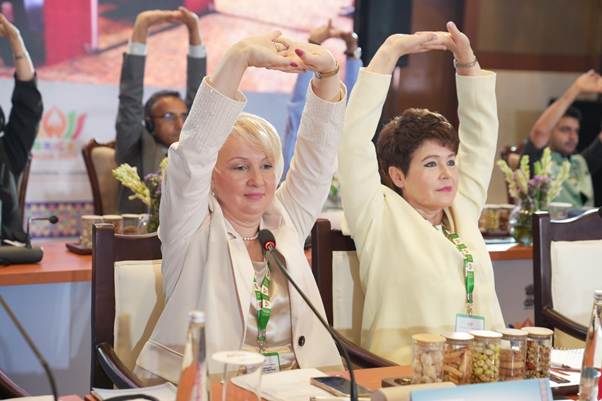
Delegates immersed themselves in Ayush through Ayush Zone, experienced Ayush Aahar, health and wellness consultations and India’s herbal heritage
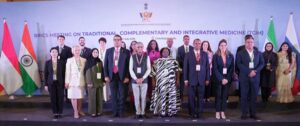
NEW DELHI, JULY 21, 2O26: India successfully hosted the BRICS Meeting on Traditional, Complementary and Integrative Medicine (TCIM) on 21 July 2026 at Chandigarh, as part of its BRICS 2026 Chairship. The meeting formed part of the broader four-day programme of BRICS Health Track events in Chandigarh, jointly organised by the Union Ministry of Health and Family Welfare and the Ministry of Ayush. The TCIM meeting brought together senior government officials, technical experts and delegates from BRICS member countries to strengthen multilateral cooperation, promote the exchange of knowledge and best practices, and advance collaboration in the field of Traditional, Complementary and Integrative Medicine.
Held under the overarching BRICS Chairship theme, “Building for Resilience, Innovation, Cooperation & Sustainability,” the meeting advanced collaboration among BRICS nations to promote evidence-based traditional medicine systems, strengthen institutional partnerships and contribute towards sustainable and resilient healthcare systems.
The meeting witnessed participation from the BRICS member states—Brazil, China, Egypt, Ethiopia, India, Iran, Russia, South Africa and the United Arab Emirates—providing a platform to exchange best practices, policy experiences and scientific advancements in Traditional, Complementary and Integrative Medicine.
The formal proceedings on TCIM commenced with a welcome address by Vaidya Rajesh Kotecha, Secretary, Ministry of Ayush, followed by opening remarks from member delegations. The Terms of Reference (ToR) for the proposed BRICS Expert Working Group on TCIM were finalised with the consensus of all available member states. The meeting also featured interactive discussions on strengthening collaboration, harmonising policy approaches and identifying future areas of cooperation among BRICS nations.
A dedicated side event on “Capacity Building, Education and Human Resource Development” was also organised by the Ministry of Ayush. The session focused on strengthening global education and training in traditional medicine through academic collaborations, Ayush scholarship initiatives, faculty and student exchanges, research partnerships and evidence-generation mechanisms aimed at building a globally connected TCIM ecosystem.
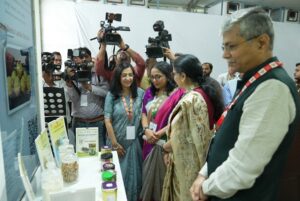
As part of India’s BRICS Chairship 2026, Vaidya Rajesh Kotecha, Secretary, Ministry of Ayush, also inaugurated the Ayush Zone, showcasing India’s holistic healthcare initiatives. The Ayush Zone offered BRICS delegates an immersive experience of Ayush through Ayush Aahar, health and wellness consultations, India’s herbal heritage, the Ministry’s vision and global initiatives, and a dedicated hub on research, innovation and knowledge. Featuring wellness activities and Yoga, the Ayush Zone reflected India’s commitment to fostering international collaboration in Traditional, Complementary and Integrative Medicine.
The TCIM deliberations contributed to the broader BRICS Health Track led by the Ministry of Health and Family Welfare and supported ongoing discussions on strengthening healthcare cooperation among BRICS countries.
The four-day programme also features a range of wellness and cultural activities showcasing India’s holistic healthcare traditions. Delegates participated in Chair Yoga sessions, and will engage in Common Yoga Protocol (CYP) demonstrations organised by the Morarji Desai National Institute of Yoga (MDNIY), Yoga Break (Y-Break) sessions during meetings, and the Fit India Run. The Ayush Zone, along with the Ayush Aahar Mela curated with technical support from the National Institute of Ayurveda (NIA), showcased India’s traditional healthcare ecosystem through health and wellness consultations, research and innovation exhibits, live Yoga demonstrations and other wellness activities, providing delegates with a comprehensive experience of the country’s holistic healthcare traditions.
The meeting delivered several significant outcomes, including progress towards the establishment of a BRICS Expert Working Group on Traditional, Complementary and Integrative Medicine; enhanced cooperation in research, education and regulatory frameworks; improved knowledge-sharing among member countries; and stronger recognition of Traditional, Complementary and Integrative Medicine within the BRICS Health agenda.
The BRICS TCIM Meeting reflected India’s continued commitment to promoting evidence-based traditional medicine, fostering international partnerships and advancing holistic, accessible and sustainable healthcare for all.
About the Author