Improper handling of excreta
Violation of the Prohibition of Employment as Manual Scavengers and Rehabilitation Act 2013
Security personnel do not hand out gifts bought for patients
Hospital charges for the menu if the patient does not eat the stale food
The beds are so narrow that I sustained injuries on both my two hands
ICU staff are allowed to sleep with their murmuring and speaking
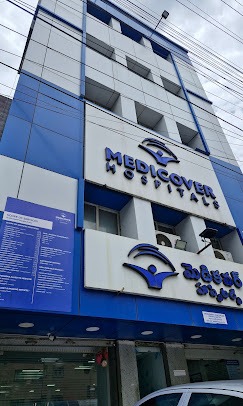
KARIMNAGAR, MAY 06, 2025: The so-called Medicover in the heart of Karimnagar faces several deficiencies in ICU waste management, including the improper handling of excreta and the failure to treat liquid biomedical waste. These systemic issues include the illegal dumping of waste, lack of proper protective gear for sanitation workers, and reliance on manual handling methods.
In India, the removal of human excreta by hand from sewer lines, septic tanks, or dry latrines is banned under the Prohibition of Employment as Manual Scavengers and their Rehabilitation Act, 2013. This legislation aims to eliminate the dehumanising practice of manual scavenging, which violates the right to live with dignity. Penalties for employing anyone for manual cleaning include imprisonment and fines, which increase for repeated offences.
Ironically, the Medicover authorities do not follow the norms, and as soon as a patient is admitted, he or she is tied with urine bags and diapers. Such a big hospital, it does not have a washroom for the benefit of the patient. But there is one washroom which is meant only for staff. Whereas, the medical staff manning the ICU said that they remove excreta from diapers through ward members, who do not have any special coverage.
Removing human excreta by hand is generally illegal in many contexts, particularly when it violates the Biomedical Waste Management Rules, 2016 which make handling, segregation, and disposal to protect public health. Such actions in a public area of a hospital can constitute a public nuisance or a severe breach of safety protocols.
According to guidelines, faecal matter on ICU floors must be treated as high-risk bio-medical waste, necessitating immediate removal via dedicated staff using PPE and thorough disinfection with 0.5% to 1% chlorine solution. Soiled materials and faeces are to be disposed of in yellow bags, with strict separation from general waste required, particularly during infectious outbreaks.
Based on search results related to medical procedures and infection control, the removal of faecal matter from an Intensive Care Unit (ICU) environment focuses on rigorous hygiene and, in severe cases, specialized device management to prevent the spread. Key aspects of managing this in an ICU setting include:
I was admitted in this hospital for treatment for stomachache, vomiting and motions for eight days and collected a whopping Rs 2.9 lakh. But there is no hospitality and nursing care for the patients. No visitors are allowed to ICU and when they visit, they should to talk for just 10 seconds.
Above all, the security personnel have attained a dubious distinction in the hospital, snatching away the belongings of inpatients. Some relatives purchase some fruits, watermelons, tiffins, etc. But the patients reach only half of the materials, and others are known for the knowledge of staff.
In my own case, my wife purchased medicines and she was not allowed to visit the ICU and took the medicines, which did not go well with my ward. Again I was forced to purchase the medicines. The night staff at the ICU do not allow the patients to sleep as they would be chatting late at night, causing a nuisance. Even the ICU room is congested with narrow beds, causing injuries to patients.
Note: A lot more news to come
About the Author