Traditional Musical instruments play a vital role from Suprabhatham to Ekanthaseva
Centuries-old Vaidyams in SV museum – a testimony to musical marvel
TIRUMALA, SEPTEMBER 04, 2026: At the Hill Shrine of Tirumala, music is never a mere performance. It is a sacred Kainkaryam (offering), service rendered in the language of musical notes.
Many renowned musical saints including Sri Tallapaka Annamacharya, Sri Purandaradasa, Matrusri Tarigonda Vengamamba won His grace through their sankeerthans, as did the Alwars through their rendition of pasurams.
In later years, legendary musicians from Carnatic Sangeet, Bharat Ratna Smt. M.S. Subbulakshmi and Dr Mangalampalli Balamuralikrishna to Dr G Balakrishna Prasad, offered their contributions to Srivaru in the form of evergreen and immortal Sankeertans.
From forest sounds to temple music:
The Puranas say that creatures of the Seshachalam forests — the bull, the elephant — once worshipped the Lord with their calls. As a symbol of that older worship, instruments echoing those sounds later entered temple service.
The Gaurugolu, evoking the bull, and the Tiruchinnam, whose voice recalls the elephant are still playing an active role in daily Kainkaryams.
Nineteen instruments, from dawn to Dusk:
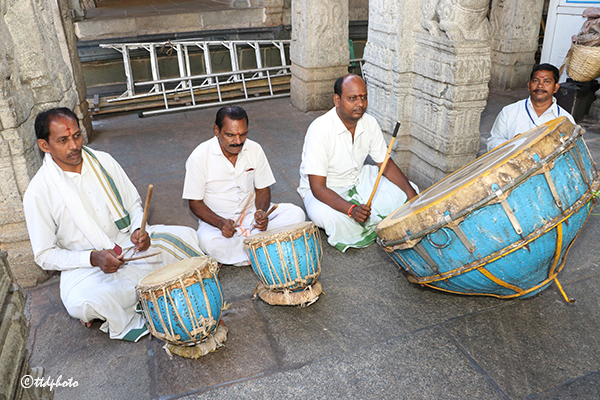
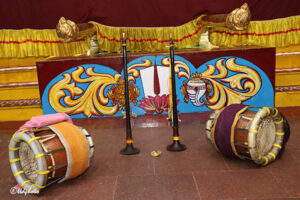
Nineteen traditional instruments are used across the day, from Suprabhatam at dawn to Ekantaseva at night — among them the Dolu, Mukkuveena, Tiruchinnam, Gaurugolu, Sanna Dolu and Sruti are a few to be mentioned.
By Agama tradition, temple music is indispensable to ritual:
During normal days, the Mela Vaidyam sounds about fourteen times, and far more often on festival days.
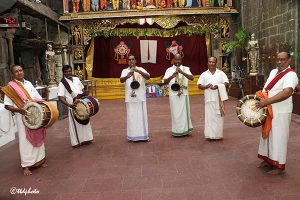
Every sound has its occasion. The Nadaswaram leads the principal rituals, the naivedyam hours and the processions, playing twice daily at the bell of offering.
The Gaurugolu and Sanna Dolu alert devotees as the Archakas and Jeeyangars approach. The Tiruchinnam lends its distinctive voice to the Mangala Harathi, while the Sruti holds the ground note beneath the ensemble.
Even the artistes wear traditional attire — white shirt, Dhoti and Uttareeyam — following a prescribed code.
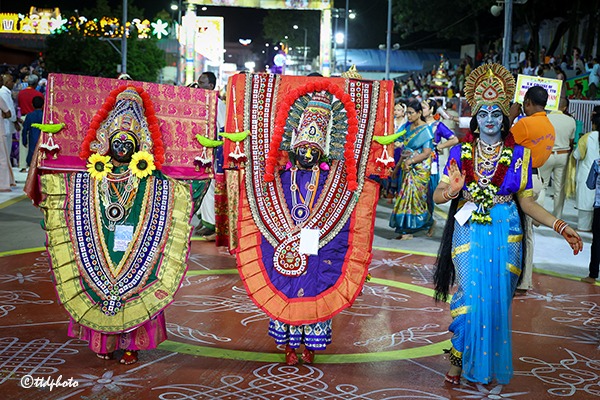
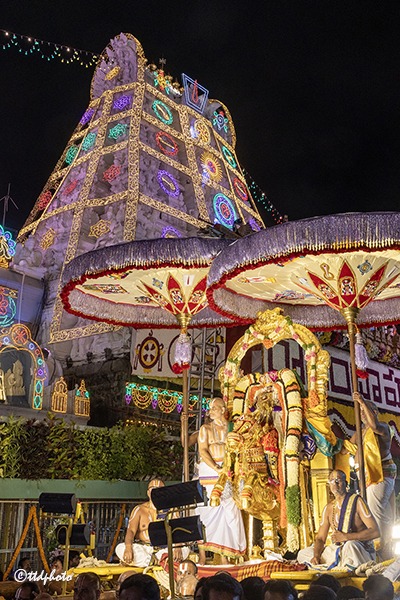
During the Salakatla Brahmotsavams, the ensemble sets the entire temple precinct resounding through the vahana sevas and processions.
A lullaby at Ekantaseva
At night the temple falls still, but the sound does not stop. As the Lord takes His rest, the Mukkuveena, Tiruchinnalu, Gaurugolu, Sanna Dolu and Sruti are played softly. As He is adorned, offered naivedyam and honoured with Tarigonda Vengamamba’s Muthyala Harathi.
A Vijayanagara inheritance:
Historical evidence suggests that under Sri Krishnadevaraya, grand temple ensembles known as the ”Nawbat Khana” — said to comprise nineteen kinds of instruments — were actively encouraged.
Generations of musician families have since carried the tradition forward as daily service rather than art alone.
TTD continues that effort through its Sri Venkateswara Recording Project, the daily Nada Neerajanam programmes infront of the temple, and the Sri Venkateswara College of Music and Dance.
Centuries-old instruments:
At the SV Museum, roughly 400-year-old instruments such as the Brahma Nagaara and Byanke stand as testimony to this enduring lineage.
Whether the ”Universal Supremo” is to be awakened or gently laid to rest, at Tirumala there must be rhythmic and soothing musical sound that orchestrates divine vibes.
About the Author