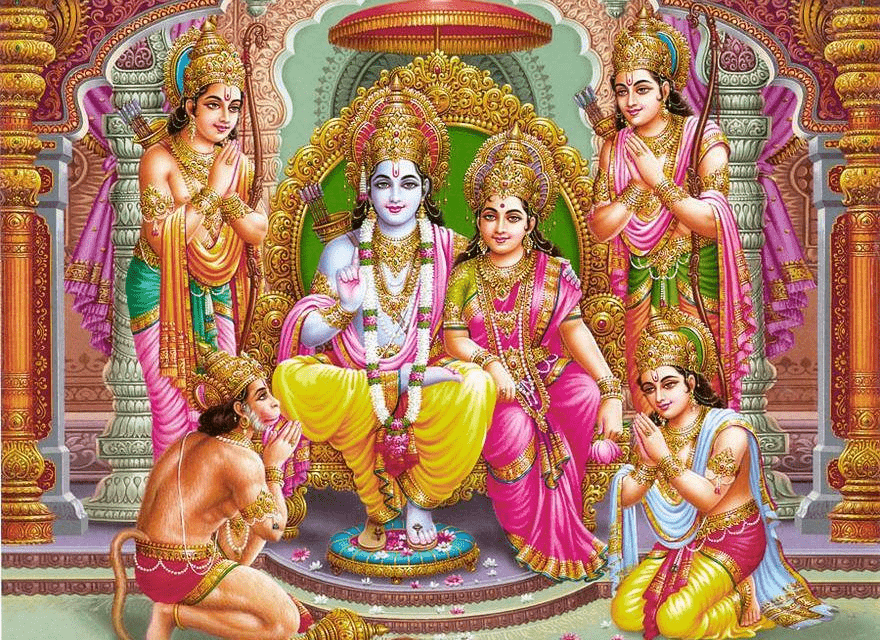
JAGTIAL, MARCH 27, 2026: The Ramayana is not merely an ancient epic—it is a profound inner spiritual journey from the individual soul (Jivatma) to the Supreme (Paramatma). Every character, every event, and every battle depicted in the Ramayana symbolises transformations occurring within the human consciousness.
For those who understand its deeper meaning, the Ramayana is not just a story—it becomes a path of spiritual practice and a gateway to liberation (moksha). When perceived through the lens of devotion, Lord Rama is no longer just a deity, but the very embodiment of the Self residing within the human heart.
Ayodhya: The State of Liberation and Bliss
Ayodhya is not merely a physical kingdom; it represents a state of supreme bliss and liberation. It symbolises the inner condition where the mind is free from all bondage and rests in complete peace.
King Dasharatha represents the Supreme Brahman, the source of all energies. His three queens symbolise:
Iccha Shakti (Willpower) – the source of desire and intention
Kriya Shakti (Action) – the power of execution
Jnana Shakti (Knowledge) – the force of true wisdom
From Jnana Shakti, represented by Kausalya, is born Rama—the embodiment of the individual soul.
Rama: The Journey of the Individual Soul
In his early life, Rama, like every human being, is unaware of his true nature and identifies with the body and senses. This reflects the common human condition of ignorance.
Through the guidance of Sage Vasishta (the Guru), Rama realises his true Self. Accompanied by Lakshmana, who symbolises detachment (vairagya), and guided by Vishwamitra, representing spiritual wisdom, Rama begins his transformative journey.
Key symbolic events include:
Slaying of Tataka – destruction of illusion (maya) through knowledge
Subduing Maricha – overcoming deceptive sensory pleasures
Entry into Mithila – living a life of righteousness
Breaking Shiva’s bow – conquering jealousy
Marriage to Sita – union with inner bliss
King Janaka represents a calm and balanced mind, where true happiness resides.
Exile: The Inner Spiritual Turning Point
Rama’s exile symbolises the turning inward—leaving the external world to begin inner exploration.
During this phase:
The forest represents introspection
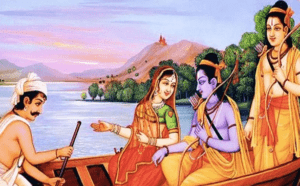
The river Sarayu symbolizes purification of the mind
Guha represents intellect guiding the path
Viradha represents ego
Shurpanakha represents uncontrolled desire
The episode of the crow demon signifies the restless mind disturbing inner peace, which is ultimately subdued through spiritual knowledge.
This phase reflects the seeker’s struggle to overcome inner impurities through discipline and awareness.
Sita’s Abduction: Loss of Inner Bliss
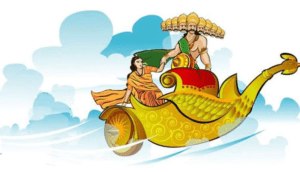
The abduction of Sita by Ravana symbolizes how ego, pride, and arrogance steal away inner happiness.
When bliss is lost, the seeker turns inward with detachment and begins self-inquiry. Encounters with:
Jatayu (discernment)
Shabari (pure devotion)
represent guidance and simplicity in spiritual progress.
Hanuman: The Power of Devotion and Meditation
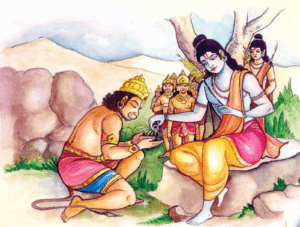
Hanuman represents unwavering devotion, concentration, and deep meditation (nididhyasana).
His journey symbolises:
Crossing the ocean – overcoming delusion
Entering Lanka – confronting greed
Finding Sita – rediscovering inner bliss
Burning Lanka – destroying negative tendencies
Hanuman demonstrates that with devotion and focus, nothing is impossible.
Building the Bridge: The Path of Practice
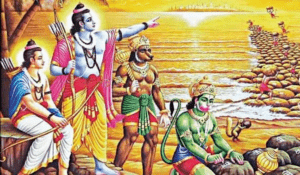
The construction of the bridge (Setu) represents disciplined spiritual practice connecting the individual to the Supreme.
Key elements include:
Surrender to Vibhishana (righteousness)
Defeating Indrajit (false knowledge)
Overcoming Kumbhakarna (inertia)
This stage emphasizes persistence and moral strength in spiritual evolution.
The Inner Battle: Destruction of Inner Enemies
The war in Lanka symbolizes the ultimate inner battle against negative tendencies.
Ravana represents the ten inner enemies:
Desire, anger, greed, delusion
Pride, jealousy, arrogance, envy
Ego and attachment
Through the arrows of knowledge, these are destroyed, signifying spiritual victory.
Liberation: Union with the Supreme
Rama’s return to Ayodhya with Sita represents:
Reunion with inner bliss
Attainment of liberation
Realization of the Self
The coronation symbolizes Brahma Sakshatkara—direct realization of the Absolute.
The Secret Meaning of the Name “Rama”
The name “Rama” itself holds profound meaning:
“Ra” – represents the Supreme (Paramatma)
“Ma” – represents the individual soul (Jivatma)
Thus, Rama signifies the union of the soul with the Supreme.
Conclusion: The Ramayana as a Living Experience
For those who grasp its inner meaning, the Ramayana transforms from a scripture into a living spiritual experience.
Rama is the Self within
Sita is inner bliss
Ravana is the collection of inner flaws
With knowledge as the path, detachment as the companion, and devotion as the driving force, the individual evolves into the Supreme.
The Ramayana is not just to be read—it is to be lived.
May Lord Rama reside in our hearts. May our lives become filled with the essence of Sita and Rama.
🙏 Jai Shri Ram 🙏
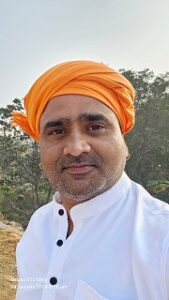
Authored Article By: Sri Sri Sri Ramanandha Paramahamsa (Sridhar Swamy)
Astrologer& Peetadhipathi Gadikota Ashram
9133323333
About the Author