An Editorial on Municipal Accountability, Traffic Management and the Right to Safe Public Spaces
Authored Article
KARIMNAGAR, OCTOBER 31, 2026: A city is not judged by the grandeur of its administrative buildings, the number of official vehicles on its roads, or the speeches delivered about development. It is judged by the condition of its streets, the safety of its pedestrians, and the seriousness with which its public institutions discharge their responsibilities. By that measure, the scenes captured on certain streets of Karimnagar raise deeply uncomfortable questions.
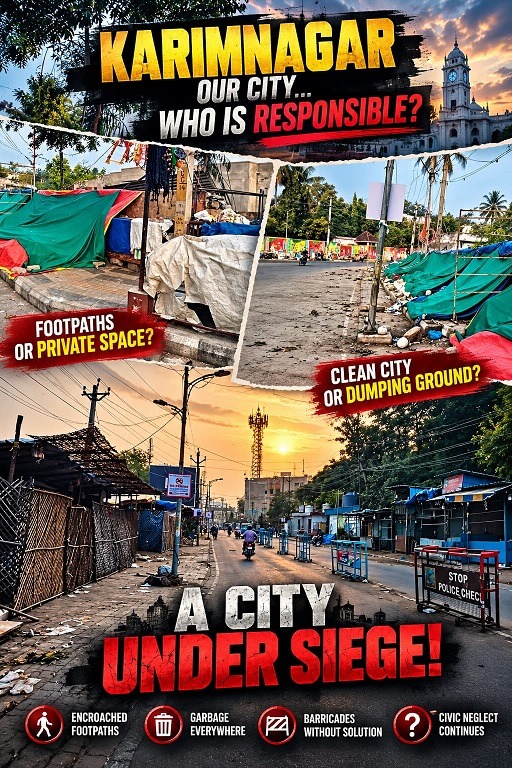
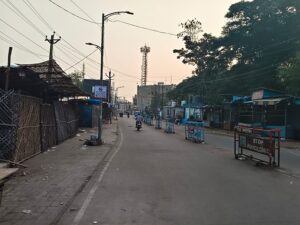
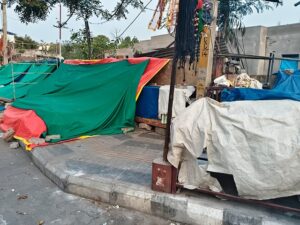
Photographs showing footpaths occupied by makeshift structures and tarpaulin-covered materials, scattered debris along roadsides, and traffic barricades placed on public roads present a disturbing picture of urban management that too in front of the camp office of District Collector Chitra Mishra and at the vicinity of MCK office. They may not establish the condition of the entire city, but they are sufficient to demand an explanation from those entrusted with maintaining public spaces.
The fundamental question is simple: Who is responsible for ensuring that the streets of Karimnagar remain safe, accessible and orderly?
Footpaths Are for Pedestrians, Not for Encroachments
A footpath is not vacant government land waiting to be occupied. It is an essential part of public infrastructure, intended primarily for pedestrians, including schoolchildren, senior citizens, women, and persons with disabilities.
Yet the photographs suggest that sections of pedestrian space have been obstructed by temporary structures, stored materials and roadside debris. When pedestrians are forced to step onto the carriageway because the footpath is inaccessible, a civic failure becomes a road-safety hazard.
The municipal administration must explain whether such occupations have been authorised, whether inspections are being conducted, and what action is taken when public access is obstructed.
Street vendors and small traders have legitimate livelihood concerns. Their rights must be respected under the Street Vendors (Protection of Livelihood and Regulation of Street Vending) Act, 2014. However, protecting livelihoods cannot mean abandoning pedestrian safety. Proper vending zones, lawful regulation and accessible walking corridors must coexist.
A municipality that cannot protect a footpath cannot convincingly claim to be protecting the interests of its citizens.
Traffic Regulation Cannot Be Reduced to Barricade Management
Traffic policing is not merely about checking vehicle documents, issuing challans or positioning barricades at intersections. Its primary purpose is to ensure safe, predictable and orderly movement.
The photographs show traffic barricades along a public road. Their presence may serve legitimate policing purposes, but they also invite questions about their necessity, positioning, visibility and effect on traffic movement.
Are these barricades placed following a documented traffic-safety assessment? Are they monitored regularly? Are they removed when no longer required? Do they leave adequate and safe passage for motorists, pedestrians and emergency vehicles?
Barricades should solve traffic problems, not become permanent symbols of administrative convenience. Traffic enforcement must be measured not merely by the number of penalties collected, but by the number of accidents prevented, dangerous obstructions removed and lives protected.
Where Is the Coordination Between the Municipality and Traffic Police?
Urban governance cannot function effectively when different departments operate in isolation. The municipality is responsible for civic infrastructure, sanitation and the regulation of public spaces within its statutory jurisdiction. The traffic police are responsible for traffic regulation and enforcement under applicable law.
But who takes responsibility when an encroached footpath forces pedestrians onto a busy road? Who intervenes when roadside materials obstruct visibility or narrow the usable carriageway? Who ensures that temporary installations do not become permanent obstacles?
Such problems require joint inspections, coordinated enforcement and clearly assigned accountability. Instead, citizens too often encounter a familiar bureaucratic response: one department refers the matter to another, while the problem remains unresolved. When responsibility is divided without coordination, public inconvenience becomes nobody’s responsibility.
Public Roads Are Not Departmental Property
Roads, footpaths and public spaces are maintained through public resources. They are not the private property of any department, official, commercial establishment or influential individual. Every citizen has a legitimate expectation that public infrastructure will remain reasonably safe and accessible.
Article 21 of the Constitution, as interpreted through the evolving jurisprudence on life and personal liberty, underscores the importance of safety and dignity. Constitutional principles of equality also demand that enforcement be fair rather than selective.
Why should an ordinary citizen face immediate action for a minor violation while a longstanding obstruction of public space escapes scrutiny? Why should residents repeatedly complain about problems that routine official inspections ought to identify? Why should administrative action begin only after photographs circulate on social media or public criticism becomes unavoidable? These questions deserve answers, not defensive press releases.
Accountability Must Begin With the Officers in Charge
A city cannot be governed effectively through ceremonial inspections, occasional enforcement drives and announcements that produce little lasting change. Municipal commissioners, engineering officers, sanitation officials, town-planning authorities and traffic police officers must be assessed against measurable outcomes.
A meaningful accountability system should examine the number of footpaths restored to public use, unresolved complaints, hazardous locations rectified, repeat encroachments addressed, and road-safety deficiencies corrected.
Senior officials must personally review recurring violations and failures of supervision. Where negligence is established, responsibility should extend beyond frontline personnel to the officers entrusted with monitoring them. The objective is not to punish officials indiscriminately. It is to replace a culture of excuses with a culture of responsibility.
What Karimnagar Needs: Action, Not Another Announcement
The municipal administration and traffic police should jointly undertake a transparent, time-bound programme:
- Within seven days: Inspect the photographed locations, identify obstructions, verify permissions and publish the responsible departments and corrective measures.
- Within 15 days: Remove unlawful obstructions through due process, clear debris, restore pedestrian access and identify safe, lawful alternatives wherever street vendors are affected.
- Within 30 days: Conduct a joint road-safety and pedestrian-access audit of major roads, markets, school zones, hospitals and busy junctions.
- Every month: Publish a public dashboard covering complaints received, complaints resolved, footpaths restored, traffic hazards rectified and pending enforcement action.
- Continuously: Introduce routine joint inspections by municipal and traffic officials, supported by photographic records and citizen feedback.
These measures do not require extraordinary political vision. They require administrative discipline, interdepartmental cooperation and a willingness to enforce existing laws fairly.
The Silence of Authorities Is Also a Statement
Karimnagar deserves better than roadsides that appear neglected, footpaths that pedestrians cannot freely use, and traffic arrangements whose effectiveness is not publicly explained. The photographs should not be dismissed as isolated images or inconvenient criticism. They should be treated as an opportunity for the authorities to demonstrate that public accountability still matters.
The responsibility of an administration does not end with the construction of a road. It extends to maintaining that road, protecting pedestrian access, preventing hazardous obstruction and ensuring that public money serves its intended purpose. Nor should citizens have to become investigators, photographers and campaigners merely to secure basic civic services.
A city does not become modern because its officials call it modern. It becomes modern when its public spaces are safe, its rules are enforced fairly and its institutions respond before citizens are forced to protest.
The Karimnagar Municipal Corporation and the Traffic Police must recognise one elementary principle: Public office is not a privilege to be enjoyed. It is a responsibility to be discharged.
And the people of Karimnagar are entitled to ask: If the authorities cannot keep the footpaths clear, the roads safe and the streets orderly, what exactly does civic administration mean?
The answer must come not through another official statement, but through visible, measurable and sustained action on the ground.
About the Author