From Telangana’s village lanes to its crowded towns, the growing reliance on ready-made food raises a public-health question. Who will protect what our children eat?
Authored Article
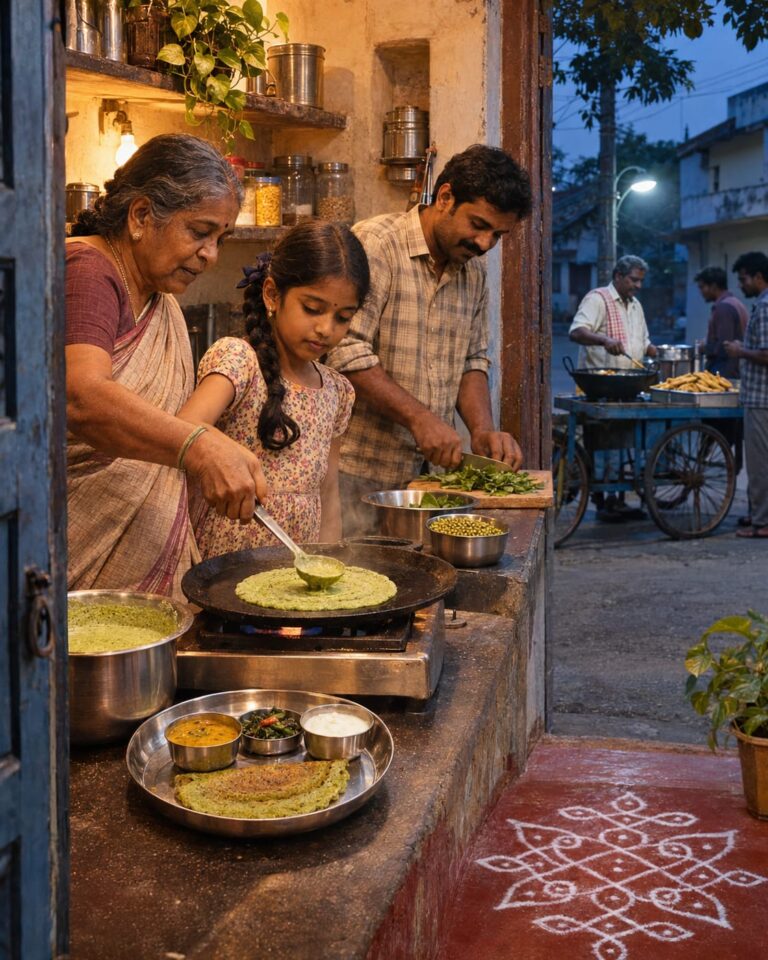
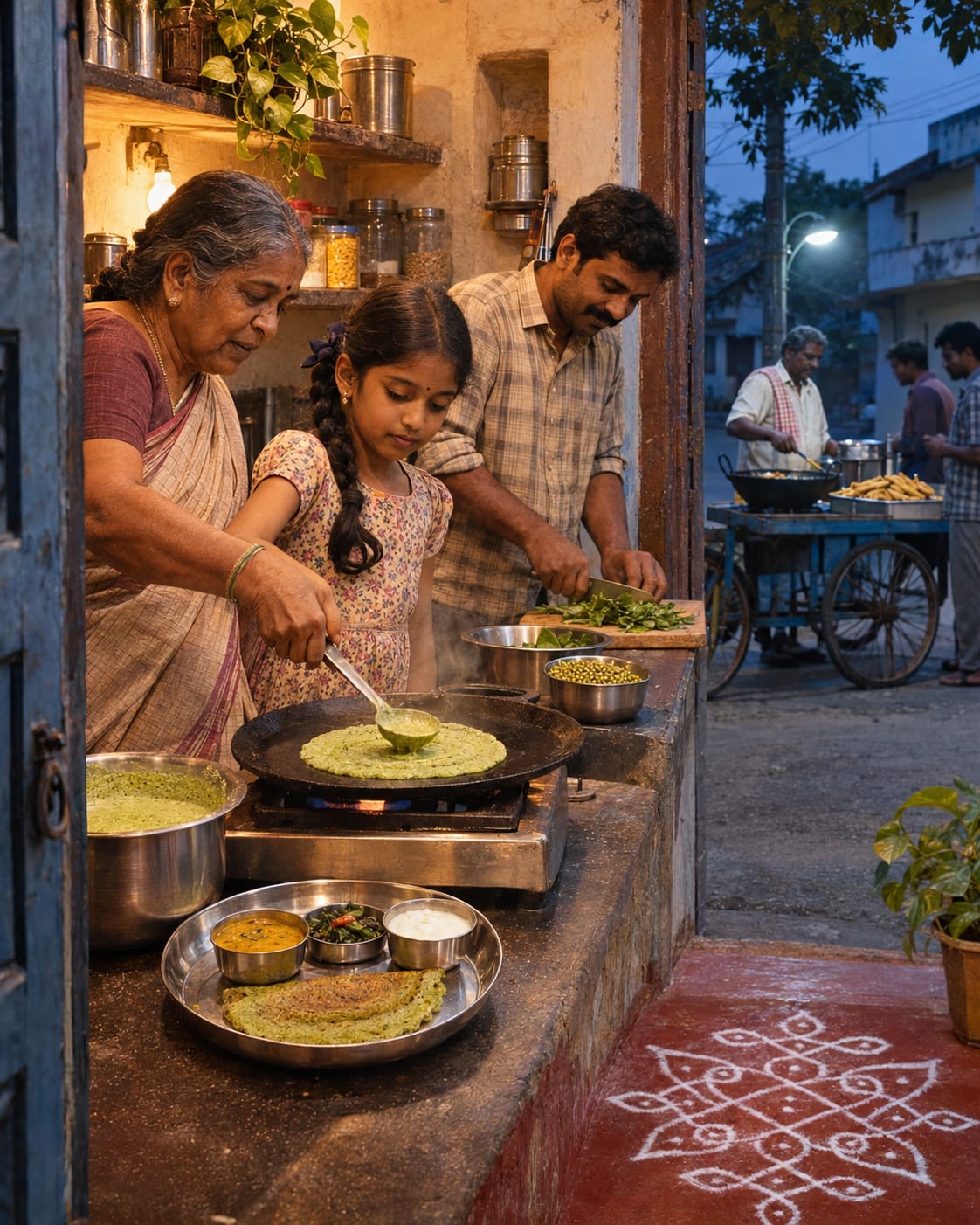
Before daylight in many Telangana homes, a mother would sweep and wash the courtyard, bathe, and draw a muggu at the doorstep as the Venkateswara Suprabhatam played. Soon there was chai on the stove, tiffin for the children, and rice, pappu and a seasonal curry being prepared for lunch. On festival days, children watched elders shape ariselu or help lay out appadalu to dry. In those kitchens, children learnt what went into a meal, how it was made, and how to make it themselves.

Today, in the lanes of a village as much as on a town’s main road, a stop at the mirchi bajji cart can become an evening routine. A packet of appadalu and a curry bought on the way home can settle the question of dinner. Even festival dishes can be ordered with a phone call. Each purchase answers an immediate need. The question is what happens when the food we once bought for an occasional change begins to shape what we eat every day.
The bill for convenience
The Household Consumption Expenditure Survey shows that beverages, refreshments and processed foods, a broad category that includes purchased cooked meals, accounted for 9.84% of average monthly per capita spending in rural India and 11.09% in urban India in 2023–24. Both shares had risen from the previous survey year. The category covers a wide range of foods, but its share in rural spending shows how far the market for convenience extends beyond the cities. [1]
The concern is what ends up on the plate, how it was prepared, and how often it is eaten. Hyderabad’s ICMR–National Institute of Nutrition advises limiting foods high in fat, sugar and salt. When deep-fried snacks, sugary drinks and heavily salted foods routinely displace varied meals, the long-term risks include high blood pressure, diabetes and heart disease. Food safety raises a separate question. Repeated heating degrades frying oil, and the Food Safety and Standards Authority of India sets a threshold beyond which used oil cannot be used for cooking. A customer can judge the crispness of a bajji at the first bite. The history of the oil is harder to see. [2, 3]
Who is responsible for what children eat?
A child eats what adults buy, pack into a lunchbox, sell at the school gate or offer as a reward. The World Health Organization points out that food preferences formed in childhood and adolescence often carry into adult life. Families shape those preferences at the dining table. Schools shape them through canteens and meals. Vendors are responsible for safe preparation, and local authorities must make hygiene standards enforceable through clean water, waste collection, training and regular inspections. A doctor’s advice has a better chance of being followed when the healthier choice is also the easier one. [4, 5]
Bring back the meal and share the work
It is tempting to ask why young people today lack the patience our mothers had. A fairer question is who gave those mothers a share of their own time. India’s 2024 Time Use Survey found that among people who did unpaid household work, women spent nearly five hours a day on it on average, while men spent under an hour and a half. If families want home cooking to survive long commutes and different work shifts, men and boys must share the shopping, chopping, cooking and washing up. A recipe passed down without anyone sharing the work is unlikely to stay in use. [6]
The way forward can begin with a few meals a family can manage even on a working day. Rice, pappu, greens and curd can be dinner. A child can learn to make pesarattu. At the next festival, a grandparent can teach the family one dish that would otherwise have been ordered. In Telangana’s towns and villages, municipalities and panchayats can help food vendors improve hygiene, while schools can make fruit, roasted gram and other simple options easy for children to choose.
The mornings of our childhood belonged to their time. What can return is the knowledge of how to feed a family well, and the pleasure of doing it together. At the next festival, let a child stand beside an elder and learn how a favourite dish is made. On the next ordinary evening, let that same child see the adults share the work of putting dinner on the table. Both lessons will last longer than the meal.
Sources
- Ministry of Statistics and Programme Implementation. Household Consumption Expenditure Survey 2022–23 and 2023–24
- ICMR–National Institute of Nutrition. Dietary Guidelines for Indians, 2024
- Food Safety and Standards Authority of India. Repurpose Used Cooking Oil
- World Health Organization. Healthy Diet
- Food Safety and Standards Authority of India. Clean Street Food Initiative
- National Statistical Office. Time Use Survey 2024
About the Author