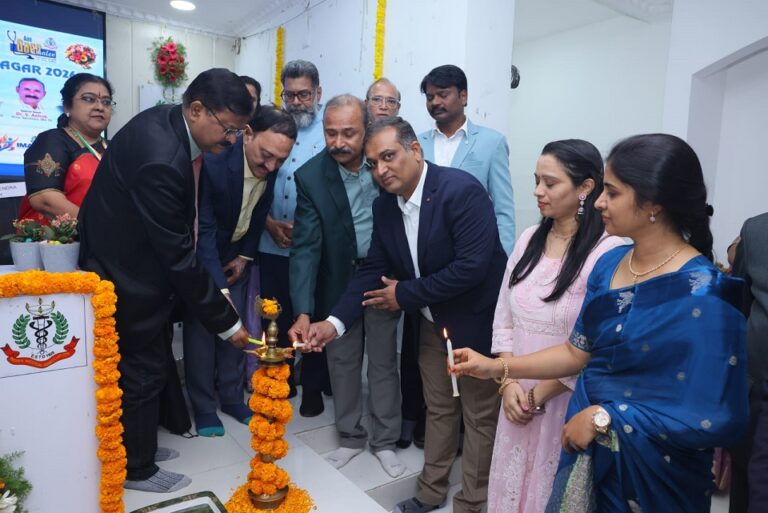
“Sometimes the safest tool is the simplest one. By using what every operating room already has, we hope to make difficult surgery safer for patients without adding any cost.” – Dr. Sumita Shankar
GUNTUR, OCTOBER 08, 2026: A team from the Department of Plastic and Reconstructive Surgery, Guntur Medical College and GGH, led by Dr Sumita Shankar, has published a novel technique in the Springer Nature Journal, in collaboration with Drexel University College of Medicine, USA.
Wounds that have been operated on before, irradiated, or badly infected often turn hard and scarred. Vital blood vessels and nerves can lie hidden just beneath, where one small slip can be dangerous. They call the method Sweep–Probe–Scrape (S-P-S).
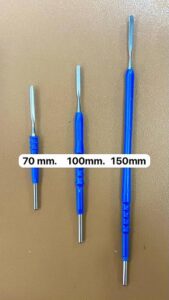
It’s the use of a simple cautery blade, whose flat edge spreads pressure instead of piercing, and its rigid tip lets the surgeon feel the tissue as they work. It was used successfully around the internal jugular vein in an irradiated neck wound, and in a chest-wall defect and a sacral pressure ulcer.
The technique needs no new equipment and adds no cost, so any operating room can adopt it at once. The authors note this is an early report of four cases, and larger studies are the next step.
A simple idea, guided by surgical expertise, to make difficult surgery safer.
https://rdcu.be/ENmze7s5z5Sa
About the Author