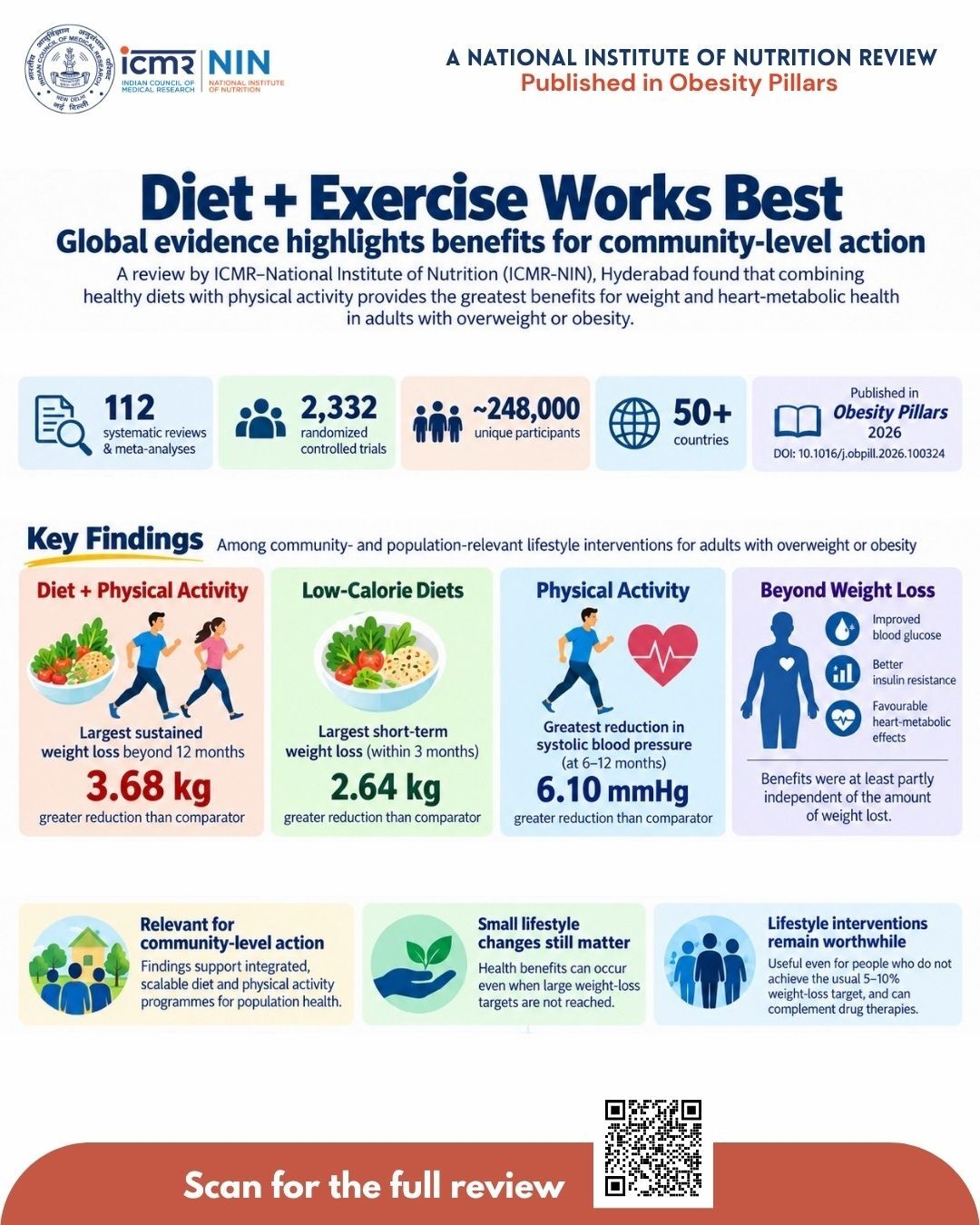
HYDERABAD, SEPTEMBER 12, 2026: A comprehensive evidence synthesis by the ICMR-National Institute of Nutrition (ICMR-NIN), Hyderabad, has found that combining dietary intervention with physical activity provides the greatest sustained reduction in body weight, while different lifestyle approaches offer additional benefits for blood glucose, insulin resistance and blood pressure.
The study, published in the renowned international research journal Obesity Pillars, is based on an umbrella review which brought together evidence from 112 systematic reviews and meta-analyses, covering 2,332 unique randomised controlled trials and 5,07,460 participant-observations from more than 50 countries.
The umbrella review, led by Dr Mahesh Kumar Mummadi and Dr Samarasimha Reddy of the institute, systematically compared dietary, physical activity, lifestyle and combined interventions among adults with overweight or obesity. It found that all major non-pharmacological approaches produced statistically significant, although generally modest reductions in body weight and Body Mass Index (BMI). The largest reduction in body weight beyond 12 months was seen with combined diet and physical activity – about 3.68 kg compared with the comparator group.
Low-calorie diets alone produced the largest short-term weight reduction, with an average reduction of 2.64 kg within the first three months. Physical activity alone produced smaller reductions in weight, but its effect increased with longer follow-up. Lifestyle interventions, including behavioural counselling, self-monitoring, goal-setting and health education showed benefits that grew with longer follow-up.
The review also found that combining diet and physical activity resulted in the greatest improvements in some glycaemic outcomes. Beyond 12 months, this combination was associated with reductions in fasting blood glucose and insulin resistance. An important finding was the effect of physical activity on blood pressure. Physical activity produced the largest reduction in systolic blood pressure of about 6.10 mmHg at 6-12 months. Intermittent fasting showed the largest reduction in diastolic blood pressure in the short term, and reduced weight up to 12 months, though this effect was not sustained beyond 12 months.
Dr Bharati Kulkarni, Director, ICMR-NIN, said, “The findings reinforce the importance of an integrated approach to obesity management. Healthy dietary practices, regular physical activity and behavioural support each have a role, but their combination can provide broader and more sustained benefits. This is particularly relevant for India, where scalable and sustainable approaches are needed to address the growing burden of overweight, obesity and related non-communicable diseases.”
“Although we drew on evidence from more than 50 countries, most of it came from high-income and upper-middle-income settings. Only a small proportion of the included reviews incorporated evidence from low-income countries, while India and other lower-middle-income countries were under-represented,” said Dr Mahesh Kumar Mummadi.
The study highlights that the benefits of lifestyle interventions are not confined to the number on the weighing scale. Cardiometabolic improvements were at least partly independent of the magnitude of weight lost, suggesting that lifestyle interventions remain valuable, concluded the researchers.
About the Author