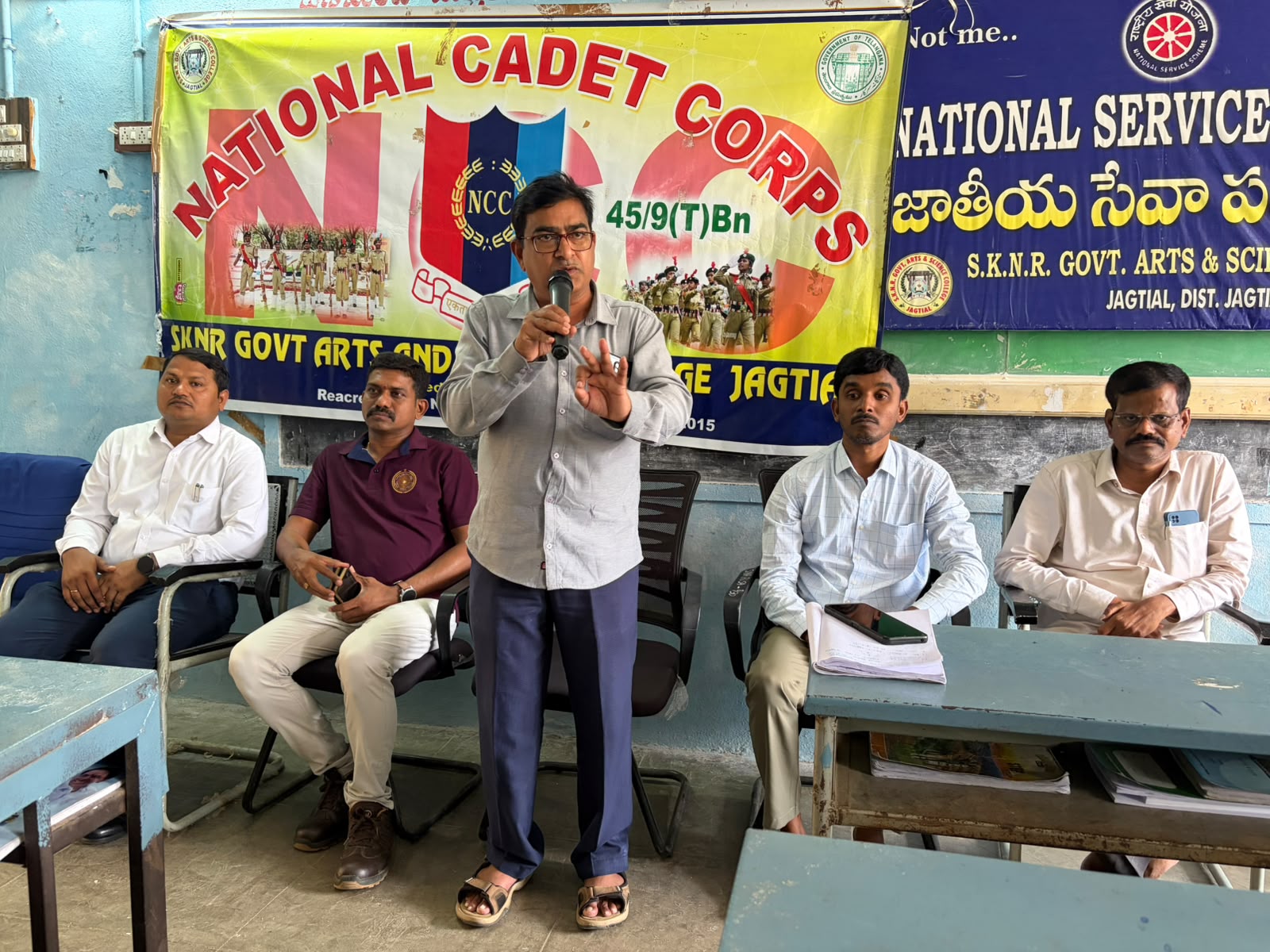
JAGTIAL, AUGUST 13, 2026: An awareness programme on cybercrimes and cyber fraud was organised at SKNR Government Arts & Science College, Jagtial, in collaboration with the National Service Scheme (NSS) and National Cadet Corps (NCC). The programme aimed to educate students about the growing threat of cybercrimes and the precautions to be taken while using digital platforms, online banking and social media.
Cyber Crime Sub-Inspectors Krishna, Rajender and Santosh addressed the students and created extensive awareness about various forms of cybercrimes and online frauds. They explained how cyber criminals use fraudulent phone calls, messages, links and fake online offers to deceive innocent people and obtain their personal and financial information.
The officers particularly sensitised students about the importance of One-Time Passwords (OTPs). They advised students never to share OTPs, PINs, passwords, bank details or other confidential information with unknown persons over phone calls or online platforms. They also cautioned students against downloading or installing APK files received from unknown sources, as such files may contain malicious software capable of stealing personal and financial information.

The speakers also explained various emerging cyber frauds involving cryptocurrency investments, multi-level marketing (MLM) schemes, fake online job offers and fraudulent investment schemes. Students were advised not to believe promises of quick and unrealistic financial returns and not to make payments to unknown persons or organisations without proper verification.
Special awareness was created about the increasingly reported “Digital Arrest” scams. The officers explained that cyber criminals may impersonate police officers or officials of government agencies and threaten victims with arrest through phone or video calls. Students were advised not to panic, disclose confidential information or transfer money when confronted with such fraudulent threats.
1930 – National Cyber Crime Helpline
The Cyber Crime officials emphasised that immediate reporting is crucial in cases of cyber financial fraud. They informed the students about the national toll-free cybercrime helpline number 1930.
They explained the importance of the first hour, often referred to as the “Golden Hour,” after a cyber financial fraud. Victims should immediately call 1930 (1-9-3-0) and report the incident without delay so that appropriate action can be initiated to trace and potentially prevent further movement of the defrauded funds.
The officials urged students to remain vigilant while using mobile phones, social media, digital payment applications and online services and to immediately report any suspicious cyber activity.
The programme was attended by Vice-Principal Prof. A. Srinivas, NCC Officer Lieutenant P. Raju, Associate Professor of Zoology, Ankam Govardhan, G.V.R. Sai Madhukar, Academic Coordinator, Librarian Kokula Surender, NSS Programme Officer K. Srinivas, Mahesh, Anil, Rajita, Kavita, Supriya, Naresh, P. Srinivas, Rahul, Srilata and Pramodh, along with NCC Cadets and NSS Volunteers.
The programme concluded with a call to students to become responsible and digitally aware citizens and to spread awareness about cyber safety among their families and the wider community.
“Stay Alert – Think Before You Click – Never Share Your OTP – Report Cyber Fraud Immediately on 1930.”
About the Author