“You Live in the Body First, Then in the World”: Director Dr. Vishal Chaturvedi on the Film’s Philosophy of Simplicity, Self-Discovery and Spiritual Awakening
GOA, NOVEMBER 28, 2026: What if the answers to life’s most complex questions lie in the simplest of things around us? Exploring this thought through the spiritual journey of Neem Karoli Baba, Hanuman Ansh, featured in the Indian Panorama section of the 57th International Film Festival of India (IFFI) 2026, invites audiences to pause, reflect and look within. Directed by Dr. Vishal Chaturvedi, the film traces the life of Lakshminarayan, born in a village in present-day Uttar Pradesh, whose quest to understand life, death and human suffering gradually leads him towards a spiritual path that touches countless lives.
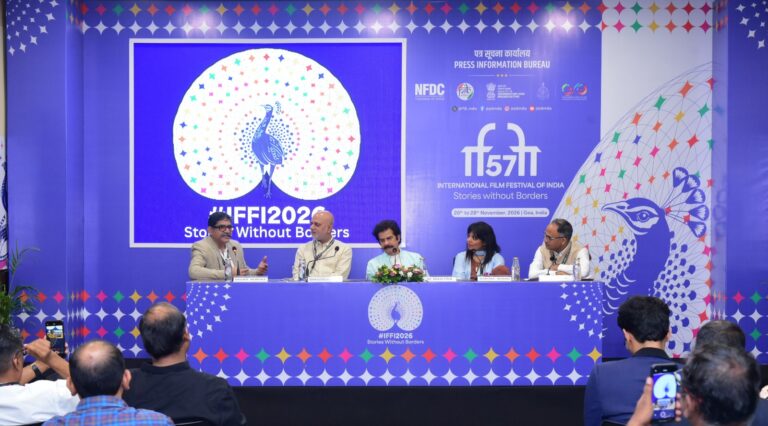
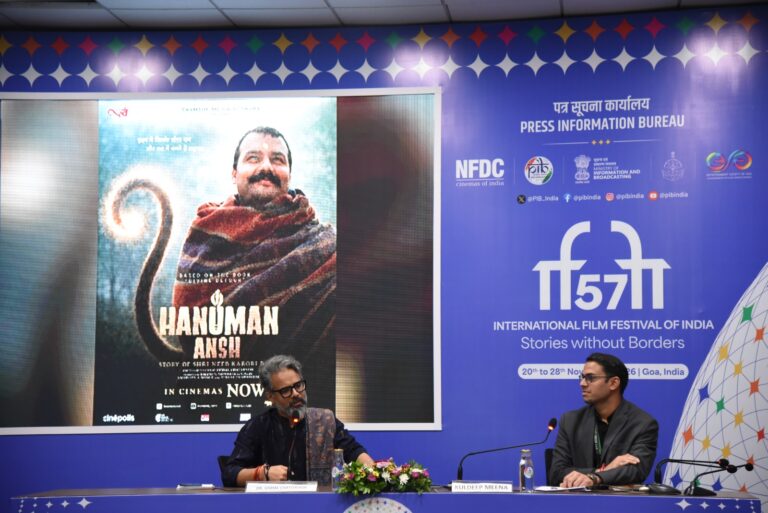
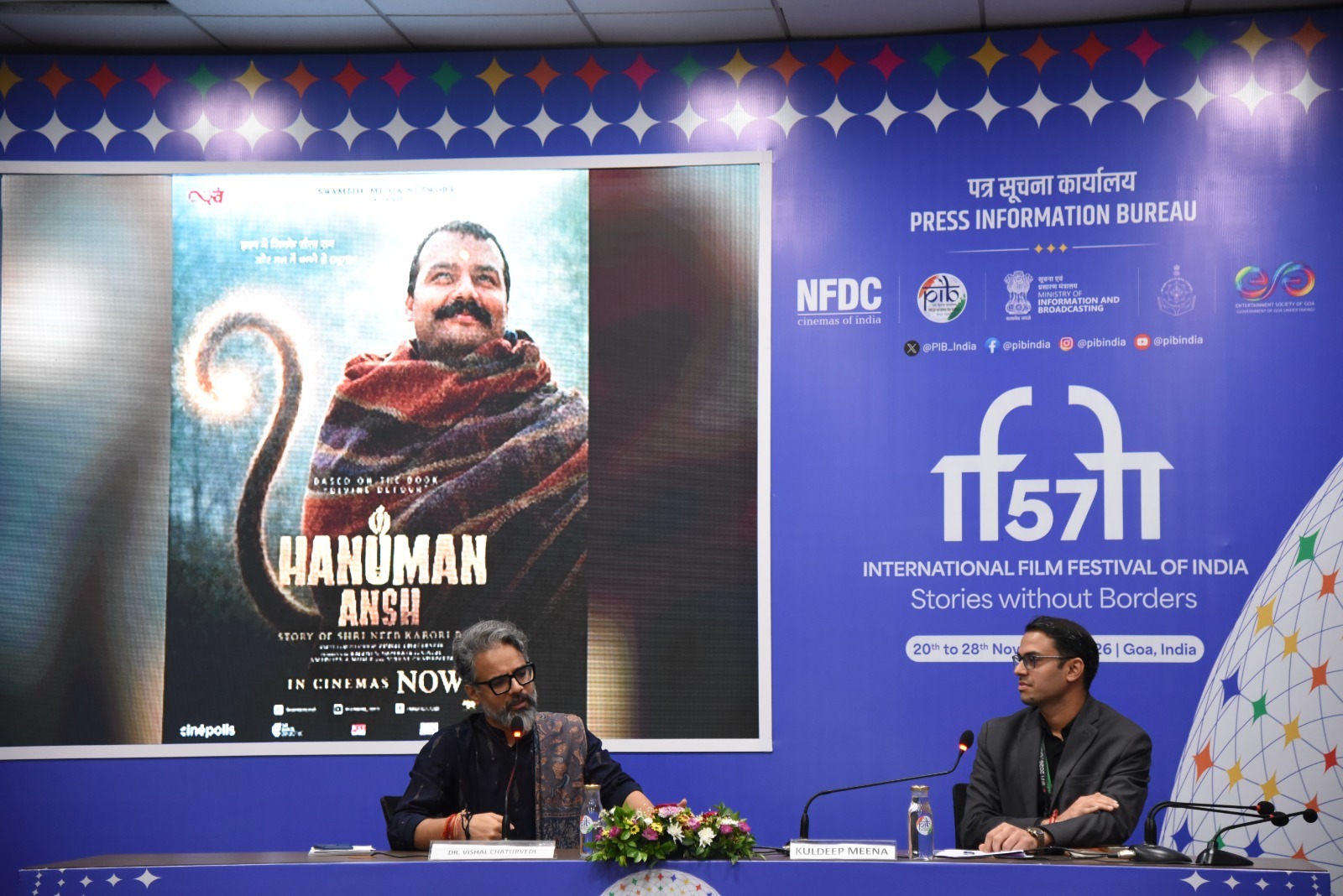
Addressing a press conference organised by the PIB today, Director Dr. Vishal Chaturvedi spoke about the inspiration behind the film and the creative philosophy that shaped its making. Crediting his mother for encouraging him to explore and learn more, he described the film as an invitation to look inward. Dr. Chaturvedi also emphasised the need to bridge the gap between a film’s narrative and ground reality, explaining that a story must remain rooted in lived experiences to connect with audiences in a relatable and engaging manner.
Speaking about the film’s production, Dr. Chaturvedi revealed that it was made on a budget amounting to almost one-tenth of that of a typical mid-budget Hindi film. He explained that the approach was guided by simplicity and a minimalistic sensibility, reflecting the very essence of the spiritual journey portrayed in the film. Stressing on the need for simplifying life and moving away from unnecessary complexities, Dr. Vishal observed that simple solutions often exist right beside us, but remain unnoticed amid the complexities of modern life.

The director also shared insights into his approach to music and performances, highlighting the importance of allowing creative talent to flourish. Drawing upon his personal connection with music featured in this film, Dr. Chaturvedi said that the singers had been identified much earlier, with the intention of providing them an opportunity to realise their potential and contribute meaningfully to the film’s creative journey. He also sought to give actors a wide creative space to explore their abilities, believing that a filmmaker’s role should be to redirect an actor’s talent rather than direct it.
Elaborating on the musical composition, Chaturvedi shared that the music for the Parvati song was retained largely in its original scratch version, with minimal modifications, allowing the musician’s voice and expression to flourish naturally. He also spoke about how one of the songs was inspired by the couplets of the 11th-century Nath yogi Gorakhnath, bringing together the film’s spiritual themes and the richness of India’s philosophical traditions. Reflecting on the teachings that guide his own life, Chaturvedi referred to Lord Krishna’s message from the Bhagavad Gita, emphasising on the importance of doing action without attachment to the results.
Sharing an interesting behind-the-scenes moment, the director revealed that the Chitrakoot room where Neem Karori Baba is seen sharing food was actually the very room Maharaj Ji used to stay in—making the shoot feel truly special and deeply personal.
Hanuman Ansh is the first instalment of a trilogy that follows Lakshminarayan’s journey across North India, where encounters with saints and ordinary people shape his understanding of life and spirituality. A mysterious encounter near Neem Karoli village leads to the name Neem Karoli Baba. The film traces his evolution into a revered spiritual figure whose teachings went on to inspire people across the world, including Steve Jobs, Mark Zuckerberg and Julia Roberts. Through its storytelling and emphasis on introspection, Hanuman Ansh seeks to remind audiences that the journey towards understanding the world often begins with understanding oneself.
About the Author