An intimate father-daughter drama of music, memory and legacy, set on the banks of the Ganges, has its India Premiere in the Indian Panorama section
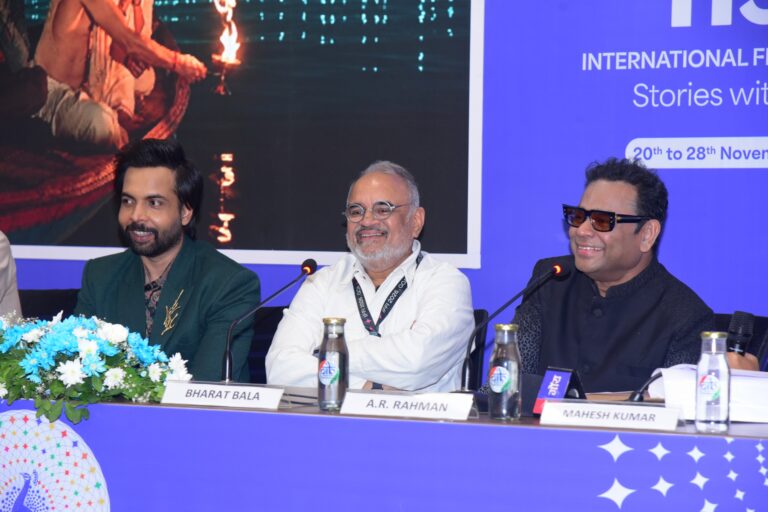
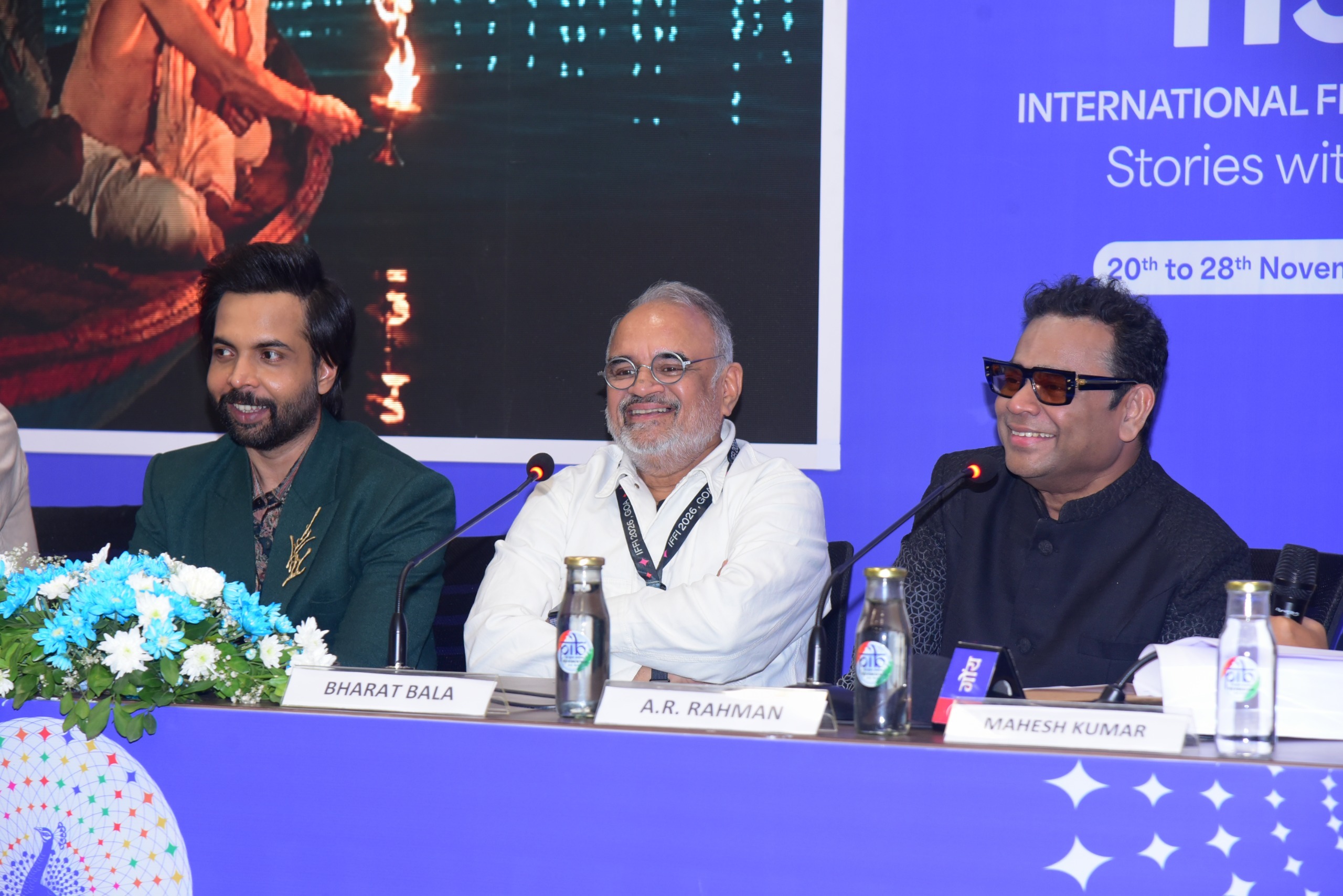
GOA, NOVEMBER 22, 2026: Filmmaker Bharat Bala reunites with music maestro A.R. Rahman for Banaras, a father-daughter drama selected for the Indian Panorama section of the 57th International Film Festival of India (IFFI) in Goa, where it will have its India premiere. The film features Abhishek Banerjee, Shahana Goswami, Neeraj Kabi, Chhaya Kadam, Indira Tiwari and Antonythasan Jesuthasan, among others.
Set against the cultural and musical landscape of Indian classical music, Banaras explores the relationship between a father and daughter, the inheritance of musical legacy and the enduring bonds between generations. The story unfolds against what director Bharat Bala describes as “the eternal spirit of the Ganges”.
Speaking about the film’s music, A.R. Rahman said that Indian classical music, both Hindustani and Carnatic, has been a constant source of inspiration throughout his creative journey. The ragas and the emotions associated with them, he said, continue to shape his musical expression.

Elaborating on his approach to the film’s score, Rahman spoke about incorporating ragas into its compositions. Reflecting on India’s cultural diversity, Rahman said it continues to inspire his musical exploration. “I enjoy every culture,” he said, noting that every language has its distinct flavour, from the potency of Punjabi to the sweetness of Bengali. He often allows languages and their cultural essence to intermingle in his music.
Bharat Bala spoke about returning to feature filmmaking after a long gap since Maryan, noting that he had worked on several short films in the intervening years. For him, making a feature film is a continuation of the creative process, undertaken when he encounters a story that he feels needs to be told.
While Banaras has been portrayed on screen in numerous ways, Bala said the city continues to offer much to explore. He described it as a place shaped by “thousands of years of lived experiences nourished by the Ganga”.
Director of Photography Marc Koninckx said his primary focus was to “catch emotions” on the actors’ faces through the use of light, camera angles, framing and composition. His aim, he said, was to make audiences feel part of the film rather than remain external observers.
“The camera is like music,” he said, explaining how he creates visual rhythm by juxtaposing colours and visual elements. He also observed that “too much colour kills colour”, highlighting the importance of using colours selectively to direct the audience’s attention and evoke emotions. This approach was particularly important while filming live at the Kumbh.
Actor Neeraj Kabi reflected on the lasting impact of the characters he portrays, saying that they often seep into his real life and become a part of him. His character in Banaras lives with dementia. Playing the role, he said, brought his own childhood to mind, a state in which the future does not exist and the present is absent.
Actor Abhishek Banerjee spoke about the challenges and spontaneity of shooting live at the Maha Kumbh, in contrast to working on controlled studio sets. Performing amid large crowds involved considerable uncertainty, he said, making the trust between the actor and director especially important. The experience took him back to his college days of performing nukkad nataks. Describing the shoot as “street cinema”, he said it transformed him both as an actor and as a person.
Rahman expressed his delight that two films featuring his music, Banaras and Ramayan, are being screened at the 57th IFFI, reflecting the festival’s celebration of diverse cinematic narratives and the enduring contribution of music to India’s storytelling traditions.
About the Author