GOA, NOVEMBER 21, 2026: Documentary filmmaking is not merely about capturing reality; it is also about earning trust, understanding lived experiences and accepting responsibility for how people’s lives are represented. While documentary cinema brings audiences closer to realities and voices often unheard, portraying real lives also raises important questions about artistic freedom, privacy and ethical responsibility.
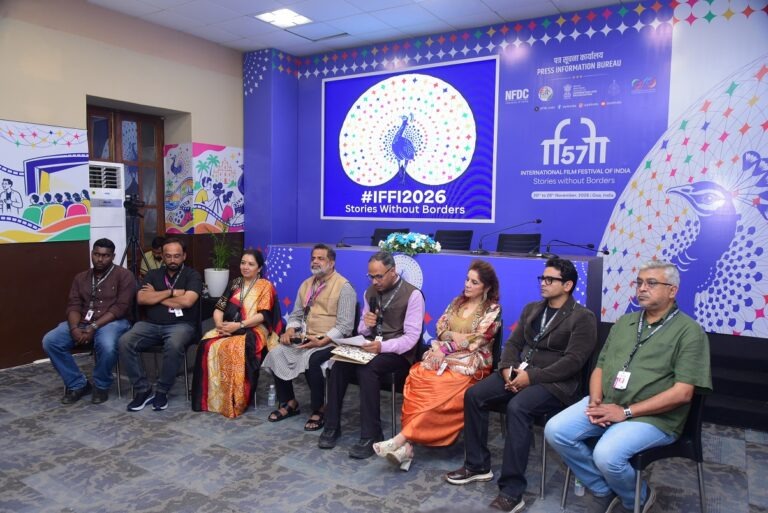
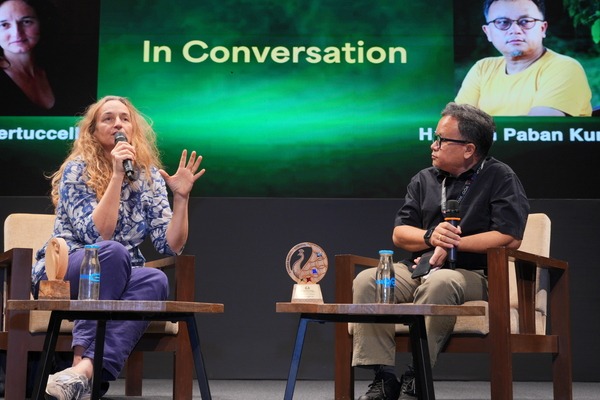
These questions formed the focus of an In-Conversation session titled ‘From Witness to Change: The Social Responsibility of Documentary Cinema’, held at Kala Academy, Panaji, on the sidelines of the 57th International Film Festival of India (IFFI). Acclaimed French filmmaker and screenwriter Julie Bertuccelli was in conversation with National Award-winning Indian filmmaker Haobam Paban Kumar.
Describing documentary filmmaking as an intimate process, Bertuccelli observed that films can have a profound impact on the lives of their subjects and, in some cases, even put them at risk. She emphasised the importance of building trust, spending time with communities and allowing people to become comfortable with the presence of the camera. Observing people in their everyday environments, she noted, helps filmmakers understand how they see themselves and how they wish to be seen by society.
Reflecting on cinema’s potential to influence social change, Bertuccelli said that films may not transform society overnight but can shape individual perceptions and encourage change. “If I just put a little bit of a seed in the brain of some people, this is a lot,” she observed. She added that she preferred films that offered hope and showcased positive examples, inspiring people to believe that change was possible.

Discussing her creative process, Bertuccelli explained that documentary ideas often emerge from unexpected encounters, places or subjects that spark curiosity. Referring to School of Babel and Since Otar Left, she observed that real-life experiences frequently provide the starting point for her films. While scripts and proposals are often necessary to secure funding, the actual filmmaking process remains open to the unpredictability of real life.
Recalling her professional journey, she spoke about spending nearly 15 years as an assistant to renowned directors, including Krzysztof Kieślowski, Rithy Panh and Bertrand Tavernier. Her work also took her across countries such as Russia, Georgia and Cambodia, providing her with experiences across different cultural and filmmaking environments.
Responding to a young filmmaker seeking advice on documenting sensitive social issues such as untouchability and patriarchy in his village, Bertuccelli underscored the importance of trust and sustained engagement. Filmmakers must demonstrate genuine interest in the communities they document and clearly communicate the purpose of their work, she said.
Offering an international perspective on documentary filmmaking, Bertuccelli discussed France’s institutional support for the genre, including the contribution of cinema ticket revenues towards film financing and the role of protected theatrical windows. She also shared that preparations were underway for a retrospective of Indian documentaries in Paris in the coming years, acknowledging India’s rich documentary filmmaking tradition.
Expressing reservations about the growing use of Artificial Intelligence (AI), Bertuccelli highlighted concerns relating to creativity, copyright and environmental costs, particularly the consumption of water and electricity. She cautioned that excessive dependence on AI could undermine human memory, independent thinking and creative authenticity.
Emphasising the distinctive value of documentary cinema, she observed that it captures something AI cannot replicate: the spontaneous emotions, silences, gestures and imperfections of real human interactions.
The session offered valuable insights into documentary filmmaking as an exercise in trust, ethical responsibility and human understanding, while highlighting cinema’s enduring ability to bring overlooked realities into public consciousness and inspire meaningful change.
About the Author