A six-month arrangement cannot become a permanent substitute for elected governance
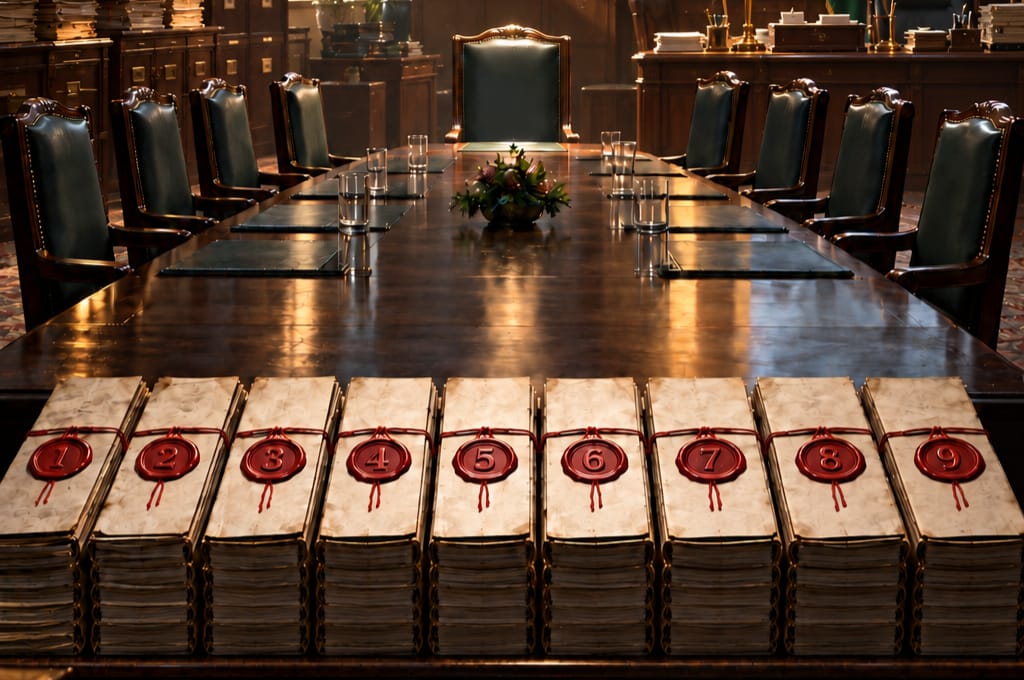
KARIMNAGAR, OCTOBER 02, 2026: The Government has issued nine separate Government Orders on September 30, 2026, each bearing a different number, to constitute Official Person-in-Charge (PIC) Committees for the nine District Cooperative Central Banks (DCCBs) in the State. Though issued separately, the orders follow a common administrative design: elected boards are absent, elections are deferred, and official committees are authorised to exercise the administrative and financial powers of the Managing Committees (MC).
The Government presents this as a necessary arrangement to prevent a governance vacuum. It refers to pending re-organisation of Primary Agricultural Cooperative Societies (PACS), the need to complete audits, delays in credit disbursal, Core Banking Solution migration and implementation of Government schemes. [Evidence 1]
The explanation may justify a temporary administrative bridge. It cannot, by itself, justify placing the cooperative banking system of an entire State under nominated management without a clear electoral roadmap.
Nine different numbers, but where are the nine distinct reasons?
The decision concerns nine separate DCCBs. The Government has chosen to issue nine different orders instead of one consolidated order. That raises an important question of administrative application of mind.
If the circumstances, pending work, legal position and electoral difficulties are identical, why were the orders not supported by a common statutory framework accompanied by institution-wise factual reasons? If the circumstances are different, where are the separate reasons for each bank?
A valid Government order must show the factual circumstances of the concerned institution, the precise reason why elections cannot presently be held, the authority competent to make the appointment, the powers being delegated, the limitations on those powers and the steps and time frame for conducting elections.
A common template cannot replace institution-wise reasoning. Nine institutions require nine reasoned decisions. Otherwise, separate numbers may conceal a single generalised decision.
Section 32(7) is a safety valve, not a democratic bypass
Section 32(7)(a) of the Telangana Cooperative Societies Act, 1964 permits the appointment of a person or persons to manage a society when there is no committee or when it is not possible to convene a general meeting for conducting elections. [Evidence 2]
This provision is necessary. A bank cannot be left without a lawful authority to approve essential transactions, protect depositors or release eligible credit. But the provision is inherently temporary. It is intended to keep the institution alive until an elected committee assumes office. It was never designed to convert appointed officials into a permanent substitute for the members’ elected representatives.
The latest orders must therefore be tested against the purpose of Section 32(7), not merely against its existence.
The first legal fault line: who was competent to appoint?
Section 32(7)(a) distributes the power between the Government and the Registrar. The Government may act in respect of the prescribed class of societies, while the Registrar is empowered to act in other cases.
The nine orders invoke Section 32(7)(a), but do not explain in adequate detail why each DCCB falls within the class for which the Government may directly make the appointment.
This is a jurisdictional question: was the appointment made by the authority empowered under the Act and the Rules, or was the statutory division of power bypassed? The answer cannot be supplied by administrative convenience. The source of statutory power must be visible on the face of the order.
The election delay has been explained, but not measured
The orders refer to the reorganisation of PACS, Farmers Service Cooperative Societies and Large-Sized Cooperative Societies. They mention new administrative units, division of assets and liabilities, and realignment of member jurisdictions. [Evidence 1]
These may be substantial tasks. But the orders do not provide measurable milestones. They do not disclose how many societies remain to be re-organised, which statutory process is incomplete, which authority is responsible for completing it, when electoral rolls will be finalised, when election proposals will be sent to the State Cooperative Election Authority, or by what date elections are expected to be completed.
A reason for delay must be capable of verification. Otherwise, “reorganisation” becomes an elastic phrase that can postpone elections indefinitely.
The Telangana High Court has cautioned that Special Officer or Person-in-Charge provisions cannot be used when there is no genuine supervening difficulty in conducting elections. It held that keeping representative institutions defunct through an arbitrary use of such powers would be unreasonable. [Evidence 3]
Until further orders cannot mean until democracy is forgotten
Each order provides for a six-month tenure, or until elections are conducted, or until further orders of the Government, whichever is earlier. [Evidence 1]
This wording requires strict interpretation. “Until further orders” cannot become a standing invitation to extend the committee repeatedly without a fresh examination of the legal and factual circumstances.
If the Government intends to continue the arrangement beyond the stated period, it must issue a fresh, reasoned order explaining why elections could not be completed, what steps were taken during the previous period, what remains pending and why another extension is legally necessary.
A chain of six-month orders cannot be allowed to defeat the statutory objective of elected governance.
All financial powers, but no visible guardrails
The orders state that the Official Person-in-Charge Committees shall manage day-to-day affairs and exercise all administrative and financial powers of the Managing Committees. [Evidence 1]
That is the most consequential part of the decision. The orders do not clearly distinguish between routine banking operations and major policy decisions; ordinary agricultural credit and high-value lending; staff administration and changes to service conditions; routine procurement and long-term contracts; or regulatory compliance and creation of new financial liabilities.
Section 32(7)(b) may permit the exercise of all or some functions of a committee or officer, but that power remains subject to the Act, the registered bye-laws, RBI directions, NABARD norms, approved service regulations, procurement policy and banking law. A general phrase granting “all financial powers” cannot erase those limitations.
A nominated committee is not an elected board
The Official Person-in-Charge Committee is a temporary statutory arrangement. It is not an elected Managing Committee and does not possess the democratic mandate of the members.
It should therefore confine itself to day-to-day administration, essential credit operations, statutory and regulatory compliance, protection of deposits and institutional assets, completion of audit and financial reporting, and preparation for elections.
It should not use an interim mandate to take decisions that permanently alter the institution, influence future elections, change the rights of members or commit the bank to major long-term obligations.
The Telangana High Court has held that a Person-in-Charge cannot assume every statutory function merely because the committee works under the control of the Registrar. A statutory function must be exercised by the authority to which the law assigns it. [Evidence 4]
The High Court order must not be selectively read
The Government orders refer to the High Court’s intervention against an earlier Official PIC arrangement and state that the earlier six-month period expired on 18 June 2026. [Evidence 1]
The certified copy of the judicial order must be examined carefully. Did the Court merely suspend the operation of the earlier Government Order? Did it restore an earlier arrangement? Did it issue any positive direction concerning the previous committee? Did it leave the Government free to issue a fresh order?
These are not interchangeable consequences. A stay of an order is not the same as quashing it, and a stay does not automatically revive an appointment that has already expired by efflux of time. The Government must explain precisely how the judicial order has been understood and applied.
Where is the accountability chain?
The nine orders confer broad powers, but do not visibly create a detailed accountability mechanism. They do not adequately clarify whether all decisions must be taken collectively, how dissenting views are to be recorded, who is responsible for a financial loss, whether minutes must be periodically reviewed, what matters require prior approval of the Registrar, what matters require RBI or NABARD compliance, and how the committee will report its work to members.
Power without a clear accountability chain is a risk for the institution and for the officials who sign the decisions.
Continuity of banking is essential, so is continuity of democracy
The Government is right to be concerned about pending audits, delayed loans, CBS migration and regulatory submissions. The public cannot be made to suffer because of an administrative vacuum.
But operational continuity and democratic legitimacy are separate requirements. One cannot permanently replace the other.
A bank may continue functioning under officials for a limited period. The cooperative movement, however, cannot remain indefinitely without elected representatives. The members whose deposits, shares and credit needs sustain these institutions are entitled to know when they will again exercise their right to choose the governing body.
What the Government must now disclose
- The precise statutory and rule-based authority for issuing nine separate appointment orders.
- The reasons applicable to each individual District Cooperative Central Bank.
- The exact work pending in the reorganisation of affiliated societies.
- The authority responsible for completing that work.
- The election preparation schedule.
- The proposed date for finalising electoral rolls.
- The proposed date for issuing election notifications.
- The financial and administrative limits applicable to the Official PIC Committees.
- The safeguards for RBI, NABARD, audit and banking compliance.
- The reasons for not placing a time-bound election programme in the orders.
The issue before the courts and the public
The nine orders may survive judicial scrutiny if the Government establishes that the appointing authority had jurisdiction, genuine circumstances prevented immediate elections, reasons were properly recorded, the committees were appointed for a strictly limited period, and their powers remain subject to statutory and banking controls.
They may face serious difficulty if it is shown that the Government lacked direct authority, the reasons were copied without institution-wise application of mind, elections were delayed without a genuine obstacle, “until further orders” was used to create indefinite tenure, unrestricted powers were granted without safeguards, or the High Court’s order was misunderstood.
The cooperative movement does not need nine orders that merely postpone the question. It needs nine transparent election roadmaps. A temporary committee can keep a bank functioning. It cannot be allowed to keep cooperative democracy waiting indefinitely.
Sources and evidence
The editorial analysis above is based on the following primary documents and judicial authorities. The legal observations are presented as issues for public and judicial scrutiny, not as a final court determination.
| No. | Source | Relevant evidence |
| 1 | Government of Telangana, G.O.Rt.No.617, dated 30.09.2026 | Records the nine-member-state context, the claimed governance vacuum, pending audits, credit disbursal, CBS/DPR issues, PACS reorganisation, the six-month tenure and the grant of administrative and financial powers to the Official PIC Committee. The supplied copy is the order issued for one of the nine institutions. |
| 2 | Telangana Cooperative Societies Act, 1964, Section 32(7)(a) and (b) | Provides for appointment of a person or persons when there is no committee or when an election meeting cannot be convened, and permits exercise of all or some functions subject to Government or Registrar control. |
| 3 | Bukya Sangu Naik v. State of Telangana, Telangana High Court, 11 October 2018 | Explains that Person-in-Charge/Special Officer provisions cannot be used without a genuine supervening difficulty and that arbitrary continuation of nominated administration can be unreasonable. Indian Kanoon, document 40592863. |
| 4 | Kakarla Venkateswarlu v. State of Telangana, Telangana High Court, 3 April 2023 | Explains that statutory functions must be exercised by the authority to which the law assigns them; control by the Registrar does not transfer every statutory function to the controlling authority. Indian Kanoon, document 124701427. |
| 5 | Union of India v. Rajendra N. Shah, Supreme Court, 20 July 2021 | Clarifies the constitutional position concerning Part IXB and State co-operative societies. Supreme Court judgment, 2021. |
| 6 | Shree Chamundi Mopeds Ltd. v. Church of South India Trust Association, Supreme Court, 29 April 1992 | Distinguishes between staying the operation of an order and quashing it; a stay does not automatically produce the same legal consequences as quashing. (1992) 3 SCC 1. |
| 7 | Section 115-D of the Telangana Cooperative Societies Act, 1964 | Recognises autonomy of cooperative credit societies subject to RBI/NABARD guidelines and contains special provisions applicable to cooperative credit societies, including DCCBs. |
Editorial note on evidence
The Government Order dated 30.09.2026 is the primary evidence for the factual statements concerning the appointment, stated reasons, tenure and powers of the Official PIC Committee. The judicial authorities are cited for the legal principles discussed. The final validity of the order can be determined only by a competent court after considering the complete Government record, the certified High Court order and the applicable Rules and bye-laws.
About the Author