Focus on grassroots transformation, digitalisation, stronger PACS and improved returns for farmers
CHHATTISGARH, OCTOBER 10, 2026: The two-day 9th National Review Workshop organised by the Ministry of Cooperation on October 8–9, 2026, in Bastar, Chhattisgarh, concluded with a call for States and Union Territories to prepare prioritised, time-bound action plans to strengthen cooperative institutions and translate policy initiatives into measurable grassroots outcomes.
Held under the theme “Sahkar se Samriddhi — The Road Ahead: Scaling Impact through Cooperative Transformation,” the workshop advanced the vision of Prime Minister Shri Narendra Modi for “Sahkar se Samriddhi” under the leadership of Union Home Minister and Minister of Cooperation Shri Amit Shah.
The workshop brought together senior State officials, Registrars of Cooperative Societies, representatives of national cooperative institutions and other stakeholders to review progress in strengthening Primary Agricultural Credit Societies (PACS), cooperative banking, dairy cooperatives, digitalisation, cooperative marketing and decentralised grain storage. Discussions also addressed cooperative development in the North Eastern States and eastern frontier regions.
State-Specific Strategies for Cooperative Growth
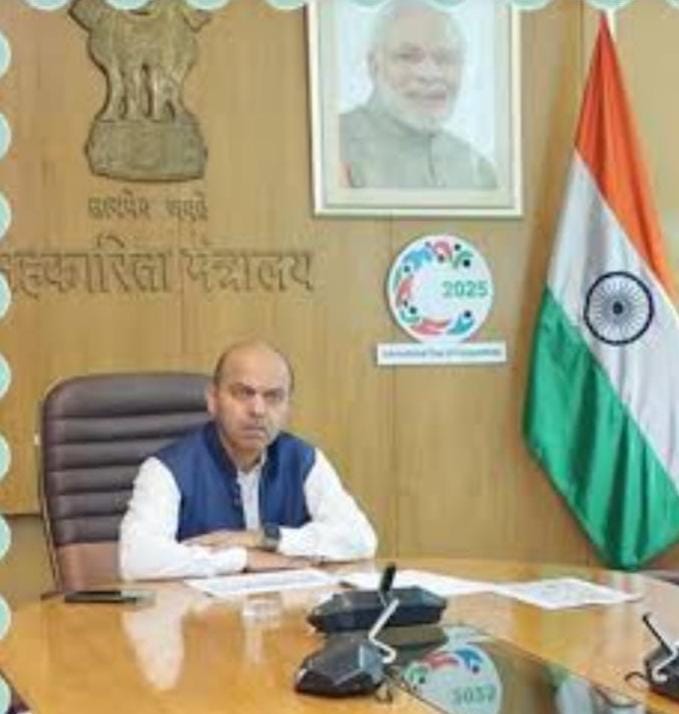
Delivering the concluding remarks, Secretary, Ministry of Cooperation, Dr. Ashish Kumar Bhutani, emphasised that no single cooperative development model could address the diverse needs of all States. He called for successful State-specific and district-level initiatives to be documented, adapted and replicated wherever feasible.
Dr. Bhutani urged States to prepare prioritised action plans, assign clear responsibilities, establish realistic timelines and introduce regular monitoring mechanisms to ensure effective implementation. He noted that innovative practices from smaller States could offer valuable lessons for larger States in developing locally appropriate solutions.
Highlighting the role of National Cooperative Exports Limited (NCEL), National Cooperative Organics Limited (NCOL) and Bharatiya Beej Sahakari Samiti Limited (BBSSL), he said these institutions were creating opportunities for grassroots cooperatives through agricultural produce aggregation, wider market access and improved price realisation for farmers. States were encouraged to strengthen linkages with these institutions and explore viable business activities through PACS, including fertiliser-related services.
The workshop also stressed the need to bring informal village-level milk collection arrangements into the organised cooperative framework and further strengthen dairy and fisheries cooperatives.
Stronger PACS Network and Digital Cooperative Banking
States were urged to accelerate the formation of new PACS, reorganise existing societies wherever necessary and expand membership. Referring to the target of establishing approximately 95,000 PACS over the next two to three years, Dr. Bhutani highlighted the importance of building a strong network of viable primary cooperatives to support agricultural credit delivery and the long-term viability of District Central Cooperative Banks (DCCBs).
Reviewing PACS computerisation, he called for completion of all components of the first phase by December 2026 and completion of audits for 2024–25 and 2025–26 by October 2026. Timely reconciliation of accounts and regular updating of records were also emphasised.
Strengthening cooperative banking through modern technology and cybersecurity was another key priority. Appreciating NABARD’s presentation on a robust and uniform Core Banking Solution (CBS) platform, Dr. Bhutani stressed the need for secure banking infrastructure, internet banking and mobile banking to improve services, maintain public confidence and attract younger customers, particularly Generation Z.
The workshop also recognised successful cooperative initiatives undertaken by States and Union Territories, including Andhra Pradesh, Uttar Pradesh, Madhya Pradesh, Gujarat, Bihar, Jammu and Kashmir, and Puducherry.
Grain Storage and Farmer-Centric Marketing
The World’s Largest Grain Storage Plan in the cooperative sector was highlighted as an important initiative for strengthening agricultural infrastructure. States were urged to accelerate the identification of locations, obtain loan sanctions and expedite the construction of godowns to expand decentralised grain storage facilities.
Dr. Bhutani underlined the potential of storage infrastructure to support alternative agricultural marketing and financing arrangements, including pledge finance, enabling farmers to explore better prices rather than being compelled to sell immediately after harvest.
The Ministry is exploring sustainable, locally adapted models to improve price realisation, particularly for cereals other than wheat and paddy, where access to MSP-based procurement may present challenges. These initiatives are intended to supplement, not replace, the existing Minimum Support Price (MSP) framework.
The Ministry plans to share potential models with States over the next two to three months and explore pilot projects in selected districts before considering wider implementation.
Commitment to Inclusive Cooperative Development
The workshop reaffirmed the importance of building a transparent, digitally enabled and financially sustainable cooperative ecosystem that responds to the needs of farmers and rural communities. Strengthening primary societies, improving market access, modernising banking services and expanding storage infrastructure were identified as important measures to enhance the contribution of cooperatives to rural prosperity.
Dr. Bhutani thanked the Chief Secretary of Chhattisgarh, the Government of Chhattisgarh, the Collector of Bastar and the district administration for their support in organising the workshop. He also appreciated the participation of representatives from States, Union Territories and cooperative institutions.
The next National Review Workshop is proposed to be held in Mahabalipuram, Tamil Nadu, in January 2027.
The concluding deliberations called for sustained coordination, clear accountability and continuous monitoring to translate cooperative reforms into measurable benefits for farmers and members, advancing the national vision of “Sahkar se Samriddhi.”
About the Author