Ministry of Textiles: Showcases Key Reforms for Cotton Farmers and Textile Industry at Reform Utsav 2026 in Hyderabad
Farmers and industry stakeholders share experiences on cotton productivity, quality improvement and MSP procurement operations
Central Silk Board showcases Silkmark digitisation, Seri Tourism and ‘Mera Resham Mera Abhiman’ initiatives
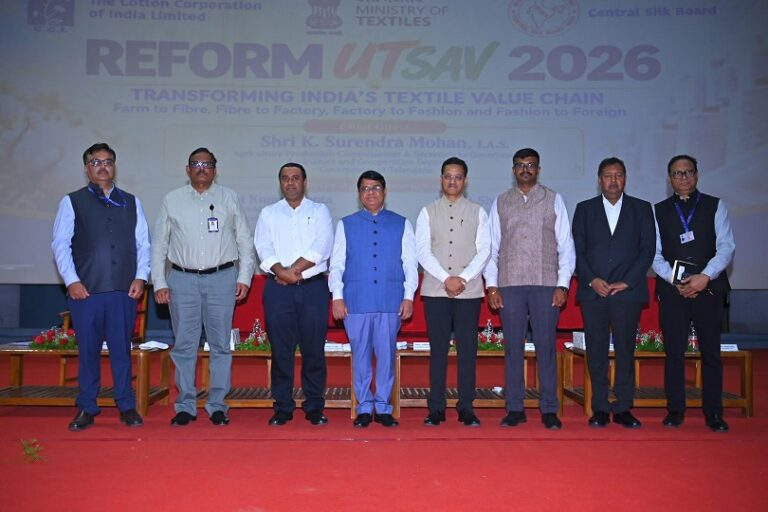
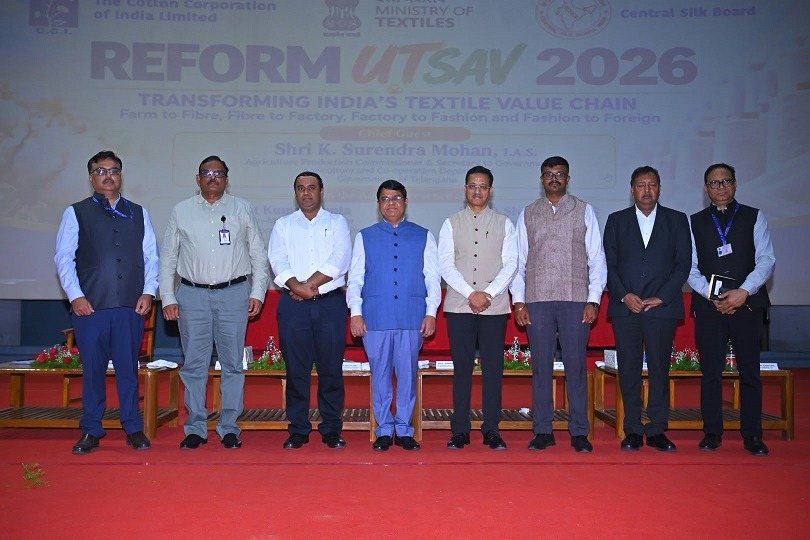
HYDERABAD, OCTOBER 06, 2026: The Ministry of Textiles, through its Public Sector Undertaking, the Cotton Corporation of India Ltd. (CCI), organised a showcase event under ‘Reform Utsav 2026’ in Hyderabad, Telangana, highlighting key reforms aimed at empowering cotton farmers, strengthening the textile industry and enhancing efficiency, transparency and ease of doing business across the cotton value chain.
The event was graced by K Surendra Mohan, Agricultural Production Commissioner (APC) and Secretary to the Government, Agriculture & Cooperation Department, Government of Telangana, as the Chief Guest. Other dignitaries included Shri Lalit Kumar Gupta, Chairman-cum-Managing Director, CCI, Shri Rahul Raj P S, Special Commissioner for Cooperation and Registrar of Cooperative Societies and Director of Marketing (FAC), Government of Telangana, Naresh Babu N, Joint Secretary (Technical) and CEO, Silkmark Organisation of India and M. Balram, Director of Research, Professor Jayashankar Telangana Agricultural University (PJTSU). Senior officials of the Ministry of Textiles, CCI and the Government of Telangana, along with cotton farmers, industry representatives and other stakeholders, participated in the programme.
Addressing the gathering, Mr K. Surendra Mohan, Agricultural Production Commissioner and Secretary to the Government, emphasised the importance of coordinated efforts among government institutions, agricultural agencies, industry bodies and farmers in advancing reforms and strengthening the cotton and textile sectors. He appreciated the benefits of HDPS over conventional practices and emphasised coordinated efforts and appropriate policy measures for its adoption across Telangana. He appreciated the initiative for bringing together stakeholders from the cotton and silk sectors on a common platform to share experiences and deliberate on key areas including digital transformation, productivity enhancement, MSP procurement, quality improvement and ease of doing business.
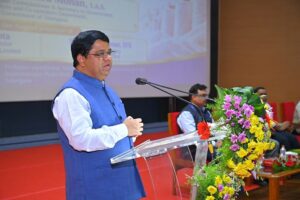
Lalit Kumar Gupta, CMD, CCI, highlighted the Corporation’s journey in safeguarding the interests of cotton farmers and its continuing transition towards transparent, technology-enabled and farmer-centric operations. He presented key reforms undertaken to improve farmer engagement, transparency, operational efficiency, ease of doing business and competitiveness across the cotton value chain.
Short films showcasing major reform initiatives were screened during the programme.
These included the Kapas Kisan App, which facilitates digital engagement with cotton farmers and provides access to procurement-related information; Mission for Cotton Productivity – Kapas Kanti, aimed at enhancing cotton productivity and quality; removal of Quality Control Orders (QCOs) on cotton, facilitating availability of raw material for the textile industry; and CotBiz, a digital system for streamlining cotton bale and seed billing and improving operational efficiency.
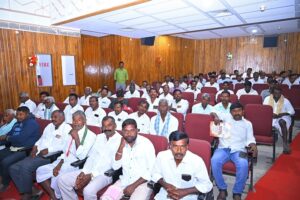
An experience-sharing session by cotton farmers provided an opportunity to highlight ground-level perspectives on cotton cultivation, productivity and the benefits of farmer-oriented interventions across the cotton ecosystem.
A progressive farmer from Akola shared his experience with the High-Density Planting System (HDPS), which has expanded from 5,000 hectares initially to around 30,000 hectares in the district, with potential yields increasing from 12 to 18 quintals per acre. He highlighted that HDPS addresses labour shortages, facilitates mechanisation, improves weed management and reduces cultivation costs compared to conventional practices.
Rahul Raj PS, Special Commissioner for Cooperation and Registrar of Cooperative Societies and Director of Marketing (FAC), Government of Telangana, shared insights on cotton procurement operations under the Minimum Support Price (MSP) framework. The discussion highlighted the importance of effective procurement arrangements, institutional coordination and seamless operations in supporting cotton farmers. M. Balram, Director of Research, PJTSAU, addressed the gathering on cotton productivity and reform-oriented interventions. He emphasized the importance of scientific cultivation practices, productivity enhancement and collaboration among agricultural universities, government agencies, farmers and industry to improve the productivity and quality of Indian cotton.
The programme also showcased key initiatives of the Central Silk Board (CSB). Naresh Babu N, Joint Secretary (Technical) and CEO, Silkmark Organisation of India, Bengaluru, presented initiatives relating to Silkmark digitisation and Seri Tourism, while Vishaka G. V, Scientist C, CSB, Bengaluru, presented the ‘Mera Resham Mera Abhiman (MRMA)’ initiative.
Shri Bommineni Ravinder Reddy, President, Telangana Cotton Millers & Traders Welfare Association, shared the ginning and pressing industry’s perspective on Kasturi Cotton quality, procurement and processing practices, highlighting the role of industry stakeholders in improving cotton quality and strengthening farmer–textile industry linkages. Shri Uday Kharat, Joint Director, TEXPROCIL shared videos on systematic approach under Kasturi Cotton Bharat programme for quality upgradation, certification, branding and traceability of Indian cotton. Shri Dhiraj Khetan, Managing Director, Sri Salasar Balaji Textiles Private Limited, shared his experience with Kasturi Cotton quality from the spinning industry’s perspective. His insights highlighted the importance of quality, consistency and value addition in enhancing the competitiveness of Indian cotton and strengthening its position in the global textile value chain.
Farmers, stakeholders and entrepreneurs of cotton and silk sector also shared their experiences of CCI and CSB initiatives, highlighting the potential of digital adoption, technology and enhanced stakeholder engagement in strengthening the cotton and silk value chain.
The showcase event provided a platform for highlighting reforms undertaken by CCI and CSB, while facilitating meaningful interaction among policymakers, farmers, industry representatives, entrepreneurs and technical institutions. The presentations and experience-sharing sessions underscored the importance of technology adoption, knowledge exchange and stakeholder collaboration in improving operational efficiency, transparency, productivity and competitiveness across the cotton and silk value chains. The event reaffirmed the Government’s commitment to farmer-centric reforms, productivity and quality enhancement, digital transformation and a business-friendly textile ecosystem. These initiatives contribute to the broader vision of transforming India’s textile value chain — from Farm to Fibre, Fibre to Factory, Factory to Fashion and Fashion to Foreign — towards a more productive, resilient and globally competitive textile sector.
About the Author