If the Government wants rural development to be real, DCCBs must be made stronger
Cooperative elections are not small elections. They are the first school of rural democracy. A good cooperative leader can become a good public leader tomorrow
A Simple but Strong Editorial Note on Rural India, Cooperative Banks and the Future of Farmers
KARIMNAGAR, SEPTEMBER 19, 2026: India lives in its villages. A strong village means a strong nation. A weak village means a weak future. If the farmer is in trouble, the village is in trouble. If the village is in trouble, the country cannot sleep peacefully.
For many years, District Cooperative Central Banks, called DCCBs, have stood near the farmer. They have helped farmers, small traders, workers, women groups and poor families. They are not just banks. They are village support systems.
DCCBs Are Not Old Banks. They Are Rural Lifelines
In Indian history, cooperative banks played a great role. They helped farmers when moneylenders charged high interest. They helped rural families when big banks were far away. They brought banking close to the village.
A DCCB understands the farmer better. It knows the crop season. It knows the village. It knows the problems of small farmers. This is why DCCBs are special.
Government Schemes Need a Strong Local Hand
Central and State Governments announce many schemes for farmers, women, youth and rural families. But a scheme becomes useful only when it reaches the village at the right time.
DCCBs can become that strong local hand. They can carry crop loans, small business loans, women group loans and rural development support to the people who really need them.
This article does not blame any institution. It only says one simple truth: if the Government wants rural development to be real, DCCBs must be made stronger.
What Happens If DCCBs Become Strong?
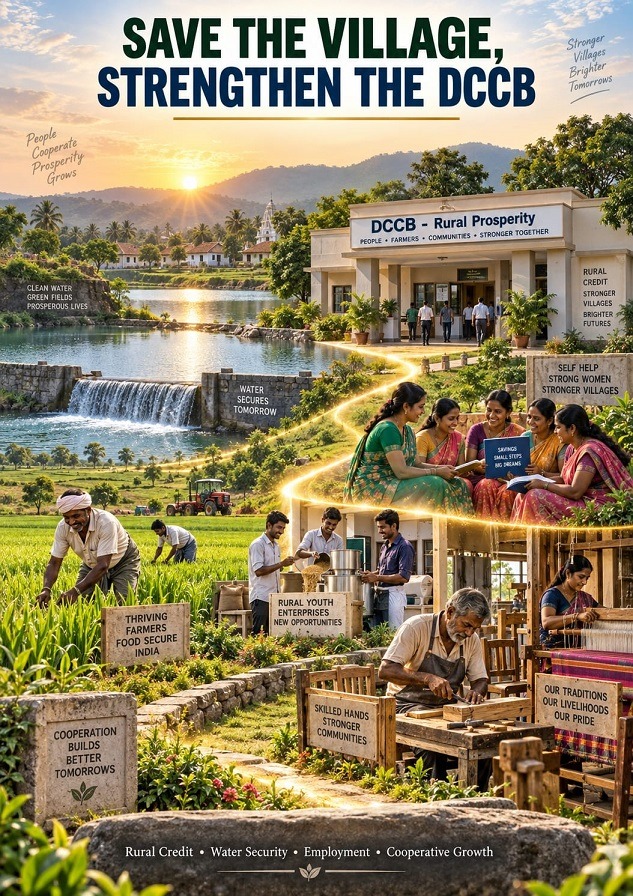
If DCCBs become financially strong, the village economy will move faster. Farmers will get timely loans. They need not depend on high-interest private borrowings. Women can start small businesses. Youth can find work in their own villages.
A strong DCCB can support warehouses, cold storages, dairy units, seed centres, fertiliser shops, farm machinery centres, small mills and rural markets. These are not small things. These are the building blocks of a strong village.
Employment Must Be Created Inside the Village
Every young person cannot get a Government job. Every young person cannot go to the city. The village itself must create work. This is possible only when credit, skill and market come together.
DCCBs can help rural youth start dairy farms, poultry units, repair centres, transport units, food processing units, digital service centres and small shops. One good loan can change one family. One good enterprise can support many families.
Agriculture Needs More Than Crop Loans
A farmer does not need money alone. A farmer needs water, storage, market and fair support. Without water, there is no crop. Without storage, there is distress sale. Without market, there is no profit.
If DCCBs are linked with village development works, they can support the revival of tanks, ayacuts and check dams. These works can improve groundwater, protect crops and increase farm income.
A tank full of water is not just a water body. It is a village bank. It gives water to fields. It supports cattle. It protects wells. It gives hope to farmers.
Revive Tanks, Ayacuts and Check Dams
Many villages once lived because of tanks and ayacuts. When these systems became weak, agriculture also became weak. If these are restored, villages can become strong again.
Check dams can stop rainwater from running away. They can recharge wells. They can help farmers grow more crops. If DCCBs, PACS, Government departments and villagers work together, water security can become a people’s movement.
Bring Back the Pride of Traditional Occupations
Villages are not only about farming. They are also about weavers, carpenters, potters, blacksmiths, shepherds, fishermen, dairy farmers and many other skilled people. Their hands built rural India.
Many traditional occupations are becoming weak because they do not get money, tools, training and market support. DCCBs can help them with small loans, working capital and marketing support. This can bring back dignity to village skills.
Educated People Must Enter Cooperative Societies
Cooperative societies need good people. They need educated people. They need honest people. They need people who understand farming, banking, law, technology and public service.
If educated and active citizens contest in cooperative societies, many changes can happen. Decisions will improve. Recovery will improve. Technology will improve. Public trust will improve. The village will get better leadership.
Cooperative elections are not small elections. They are the first school of rural democracy. A good cooperative leader can become a good public leader tomorrow.
Governance Must Be Clean and Professional
DCCBs must be strong, but they must also be responsible. Public money must be protected. Depositors must feel safe. Loans must be given fairly. Recovery must be done properly. Audit must be strict. Management must be professional.
This is not against democracy. This is true democracy. A cooperative bank belongs to its members. So every rupee must be handled with care.
A Simple Road Map for Rural Change
- Strengthen DCCBs with capital, technology and professional systems.
- Make PACS multi-service village centres.
- Give timely crop loans to farmers.
- Support women self-help groups and rural women entrepreneurs.
- Finance youth employment projects in villages.
- Revive tanks, ayacuts and check dams with community participation.
- Support traditional occupations and village crafts.
- Build warehouses, cold storages and small processing units.
- Encourage educated and socially committed people to contest in cooperatives.
- Protect depositors, improve recovery and keep governance transparent.
The Real Rural Revolution
The real rural revolution will not come only from big speeches. It will come when a farmer gets money on time. It will come when a tank gets water. It will come when a young person gets work in the village. It will come when a woman starts her own enterprise. It will come when a skilled artisan gets back his dignity.
DCCBs can make this happen. But they must be trusted, reformed and strengthened. They must be given a bigger role in rural development, with proper rules and proper accountability.
Conclusion: Strengthen the DCCB, Strengthen the Village
India cannot become strong by leaving its villages weak. Farmers cannot become strong without timely credit. Youth cannot stay in villages without employment. Traditional skills cannot survive without support. Water bodies cannot live without care.
So the message is clear: strengthen the DCCB, strengthen the PACS, strengthen the farmer and strengthen the village.
A strong DCCB is not only a bank. It is a bridge between policy and people. It is a shield for the farmer. It is a hope for rural youth. It is a partner in water security. It is a platform for women, artisans and small producers.
If India wants real rural prosperity, it must look again at its cooperative banks. The future of rural India may begin at the doorstep of a village cooperative society and rise through a strong District Cooperative Central Bank.
About the Author