NEW DELHI, MARCH 13, 2026: Ensuring a safe drinking water supply requires infrastructure such as pipelines, pumps, and storage structures. Yet beyond these networks of steel and concrete, water systems are sustained by the people who keep them running every day. Under the Jal Jeevan Mission, elected representatives, frontline workers, members of self-help groups, trained volunteers, and technical personnel come together at the rural level to operate, monitor, and maintain local water supply systems, supporting the delivery of safe drinking water to rural households.
Launched in August 2019, the Jal Jeevan Mission aims to provide every rural household with safe and adequate drinking water through a Functional Household Tap Connection (FHTC). At the start of the programme, only 3.23 crore rural households had tap water connections. As of 3 March 2026, more than 15.82 crore rural households across the country are reported to have tap water supply in their homes, reflecting India’s continued commitment to universal rural drinking water coverage. The Union Budget 2026–27 has proposed an allocation of ₹67,670 crore for the Mission, which has also been extended until 2028. This rapid expansion of rural drinking water infrastructure across the country has been supported by the efforts of thousands of individuals working at the grassroot level.
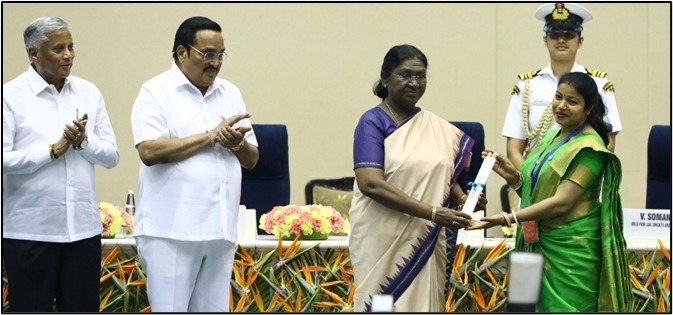
Across villages, these efforts are reflected in the dedication of people who oversee water systems, monitor operations, and safeguard water quality for their communities. To celebrate and encourage such contributions, the President awarded distinguished individuals for their role in strengthening rural drinking water governance during the Jal Mahotsav 2026. The nationwide campaign is being organised from 8 March to 22 March, promoting Jan Bhagidari under the Jal Jeevan Mission. The following stories offer a glimpse into the journeys of some of the individuals and the role they play in sustaining rural drinking water services in their communities.
Sustaining Village Water Systems through Local Participation
In Mankuwar Gram Panchayat in Chitrakoot district of Uttar Pradesh, the functioning of the village drinking water system reflects the role that local participation can play in sustaining rural infrastructure.
Under the leadership of Gram Pradhan Rachna Devi, the Mau Rural Drinking Water Supply Scheme ensured Functional Household Tap Connections for all 340 households, serving nearly 1,971 residents of the village. Alongside the creation of infrastructure, efforts were made to ensure that the system continues to function effectively over the long term.
To support the operation and maintenance of the village water supply system, households contribute a monthly user charge of ₹50. The village currently collects around ₹5,275 every month, which is used to meet routine operational needs.
Regular meetings of the Village Water and Sanitation Committee review billing, revenue collection and service delivery. These meetings help ensure transparency and collective oversight in the management of the water supply system. Rachna Devi has also encouraged the participation of women and members of the Scheduled Caste communities in the committee, strengthening inclusive water governance at the village level.
Keeping Water Flowing in the High Himalayas
In the high-altitude terrain of Matho village in Leh district of Ladakh, maintaining a reliable drinking water system requires continuous technical effort and coordination among local institutions and field staff.
Public Health Engineering lineman Tsering Dorjey has played an important role in supporting the installation and maintenance of the village’s drinking water infrastructure. Working in challenging terrain and harsh weather conditions, he contributed to ensuring that households in Matho village receive reliable tap water connections under the Jal Jeevan Mission. Also, along with the collective efforts of the community members, the expansion and functioning of drinking water services in the village have been supported and illustrate how administrative and technical personnel contribute to the implementation of rural water programmes.
Women Safeguarding Water Quality in Gujarat
In Manekpor village of Gandevi taluka in Navsari district of Gujarat, water quality monitoring is supported through the active involvement of the Village Water Quality Team. Falguniben Sanjaybhai Rathod, a member of the Village Water Quality Team, regularly conducts testing of drinking water using the Field Test Kit to ensure that safe water is supplied to households in the village under the Jal Jeevan Mission.
Over the past three months, she has tested 19 water samples at the household level, ensuring that samples are collected from all habitations of the village. Alongside testing, awareness activities on water quality and disinfection practices such as home chlorination, are promoted within the community to help maintain safe drinking water.
She also ensures that the results of water quality testing are shared with the community. In case of any concerns regarding water quality, the samples are verified through laboratory testing as per established protocols. An elected member of the Gram Panchayat, Falguniben is also associated with the Self Help Group Bhulku Mahila Bachat Mandal and works as an ASHA in the village, contributing to public health awareness and community mobilisation.
About the Author