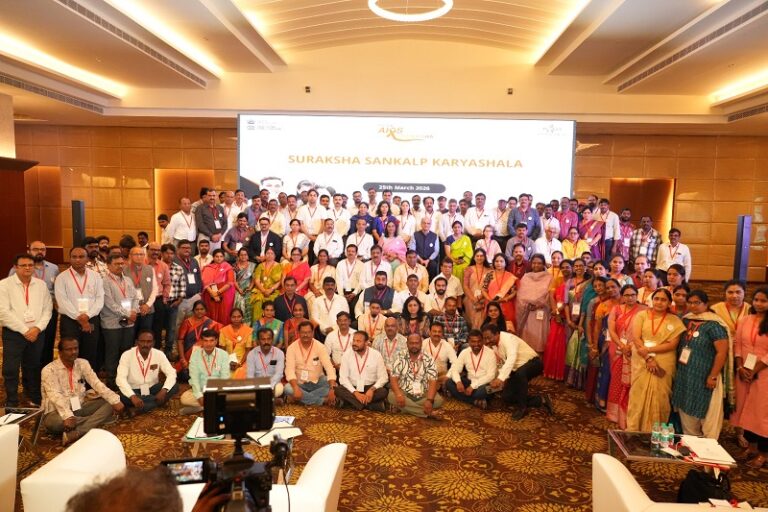
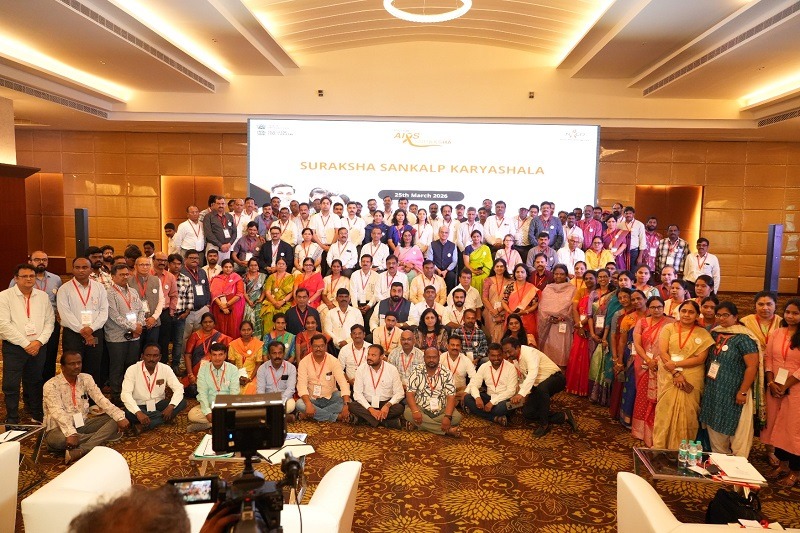
HYDERABAD, MARCH 25, 2026: Under its intensified national initiative, Mission AIDS Suraksha, the National AIDS Control Organisation (NACO), Ministry of Health & Family Welfare, Government of India, conducted the Suraksha Sankalp Karyashala in Hyderabad on 25th March 2026 to strengthen district-level HIV response. The Karyashala brought together national, State and district leadership to accelerate targeted interventions across priority districts in the State.
The workshop was chaired by Dr. Rakesh Gupta, Additional Secretary & Director General, NACO. Dr. S. Sangeetha Satyanarayana, Mission Director, National Health Mission, Telangana and Project Director, Telangana State AIDS Control Society (TSACS) also participated.
Telangana remains a key focus State in the national HIV response, with an adult HIV prevalence of 0.41% and an estimated 1,56,961 people living with HIV. The state has 19 priority districts, which have been identified for intensified programme implementation and monitoring.
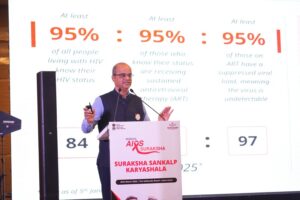
Addressing the participants, Dr. Rakesh Gupta, AS & DG, NACO, emphasized that priority districts remain central to India’s HIV response, and focused, data-driven interventions at the grassroots level are critical to improving outcomes and accelerating progress towards national targets.” He further highlighted the need for strengthened planning, monitoring and accountability at the district level to ensure effective programme implementation.
Senior Programme Officers, District Collectors, Additional District Collectors, District Medical & Health Officers and District AIDS Control Officers from across the State actively participated in the Karyashala. Representatives from 19 priority districts, including Hyderabad, Ranga Reddy, Khammam, Karimnagar, Nalgonda, Siddipet, Medak, Warangal, Nizamabad, Adilabad, Suryapet, Peddapalli, Jangaon, Vikarabad, Kamareddy, Hanumakonda, Sangareddy, Mahabubabad and Jayashankar Bhupalapally, took part in the deliberations.
During the Karyashala, district teams presented detailed updates on programme performance, highlighted operational and field-level challenges, and engaged in structured discussions to develop district-specific, data-driven action plans. The deliberations focused on strengthening HIV prevention strategies, expanding access to testing services, improving linkage and retention on Antiretroviral Therapy (ART), enhancing viral load suppression, and scaling up targeted interventions among vulnerable and key populations. The platform enabled collaborative problem-solving, experience sharing and convergence between national, State and district stakeholders, ensuring a more coordinated and responsive HIV programme.