Public Advisory on Antimicrobial Resistance (AMR)
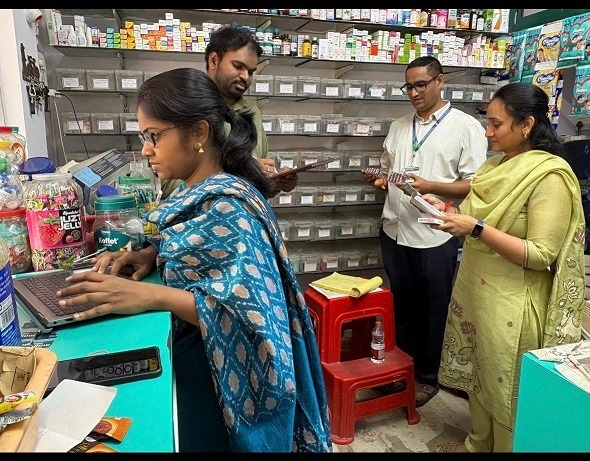
HYDERABAD, JANUARY 21, 2026: The Drug Control Administration, Telangana, as part of a special drive to control Anti-Microbial Resistance (AMR), conducted raids across the State on Wednesday.
Raids were conducted at several medical shops across the state, with a focus on controlling the indiscriminate sale of antibiotics. Discrepancies pertaining to the sale of antibiotics were detected in 190 medical shops, and Show Cause Notices were issued for initiating departmental action.
The officers detected several violations related to the sale of antibiotics, including sale without a prescription from a Registered Medical Practitioner, sale without issuance of a sale bill, sale in the absence of a Registered Pharmacist, non-maintenance of the Schedule H1 Drug Register in respect of antibiotics, and non-maintenance of Prescription Registers in respect of antibiotics.
Antimicrobial resistance or AMR is a global healthcare crisis. WHO has declared that – ‘AMR is one of the top 10 global public health threats facing humanity’. It is estimated by WHO that bacterial Antimicrobial Resistance was directly responsible for 12.7 lakh global deaths in 2019. As per the reports, India has one of the highest rates of antimicrobial resistance (AMR) worldwide.
‘Antimicrobials’ includes antibiotics, antivirals, antifungals and antiparasitics. Drug-resistance in Bacteria i.e. “Antibiotic Resistance” is increasing globally.
Antibiotics save lives when used correctly
When used incorrectly, bacteria start to acquire resistance to the ‘antibiotics’ designed to kill them i.e. bacteria develop the ability to withstand the effects of antibiotics. As a result of drug resistance, antibiotics become ineffective, and infections become difficult or impossible to treat.
When bacteria become resistant, they develop into ‘superbugs’ that can spread from person to person. This means common infections cannot be cured, because the life-saving antibiotics stop working against bacteria and posing a significant threat to public health.
The development of antimicrobial resistance is a natural phenomenon. However, certain human actions accelerate its emergence and spread.
Preventing antimicrobial resistance (AMR) is a complex task and requires a multifaceted approach involving doctors and other health care professionals, regulatory authorities, industries and the general public.
As per WHO, over-prescribing of antibiotics is one of the causes of antimicrobial resistance. As per WHO guidelines to prevent AMR, doctors shall prescribe antibiotics only when they are necessary and appropriate. Rigorous infection prevention and control measures shall be implemented in the hospitals to reduce the spread of drug-resistant pathogens.
Overuse of antibiotics in food-producing animals i.e. livestock (cows, buffalo, sheep, and goats) and in poultry and fish farming is also leading to Antimicrobial Resistance. Antibiotics shall not be used for ‘growth promotion’ in livestock, poultry and fish.
Environmental factors such as pollution from pharmaceutical manufacturing units and inappropriate disposal of unused antibiotics also contribute to antimicrobial resistance.
Antibiotics are ‘Prescription Drugs’. Antibiotics are enlisted under Schedule-H and Schedule-H1 of Drugs Rules. Antibiotics cannot be sold by medical shops or pharmacies without the prescription of a qualified doctor (Registered Medical Practitioner). Over-the-counter sale of antibiotics to patients by medical shops/pharmacies is punishable under Drugs and Cosmetics Act. Stringent action shall be taken against medical shops/pharmacies that carry out the sale of antibiotics without the prescription of a qualified doctor.
Role of public in fighting ‘Antimicrobial Resistance’
The public has a crucial role in combating antimicrobial resistance. Here are some ways the public can contribute to addressing AMR:
Antibiotics should be used only when prescribed by a qualified doctor. Antibiotics shall be purchased from a medical shop only on the basis of a ‘prescription’ issued by a qualified doctor.
Antimicrobial Resistance can occur when you take an antibiotic that you do not need. Misuse and overuse of antibiotics is harmful. Rational use of antibiotics is must.
For example:
• If you take an antibiotic for a common cold or upper respiratory infection, which are most likely viral infections. Antibiotics are ONLY for treating bacterial infections. Antivirals are ONLY for treating viral infections.
• If you start using antibiotics on the advice of a quack (unqualified practitioners) or a pharmacist in a medical shop and thus you buy a lower dose version than the actual drug and or take more than the required dose.
This helps the microbes acquire resistance to the antibiotic drug i.e. leading to Antimicrobial Resistance (AMR).
Complete the full course of treatment (full prescription – number of doses of medicine, days etc as prescribed/directed by the doctor), even if you start to feel better before completing the course.
It’s important not to share antibiotics with others or use leftover antibiotics from previous treatments.
Be medicine smart!
Got a headache? Common Cold? Stomach Pain?
Before you use the antibiotic or buy them from the medical shop, stop and think: If I take this without a prescription, will it stop working for me when I need it?
Please remember: When you take antibiotics even if you don’t need them, they can stop working when you need them most.
Get talking!
You can help spread the word so that more and more of us protect against ‘Antimicrobial Resistance’.
Tell your friends, tell your family.