In yogic symbolism, the Vaikunta Uttaradwaram is a reflection of the Ajna Chakra. Just as one enters the sanctum through the northern gate of a temple, when the Ajna Chakra opens, an inner journey into the depths of consciousness begins
Even a few moments of silent meditation on this sacred day is equivalent to entering the true Uttaradwaram.
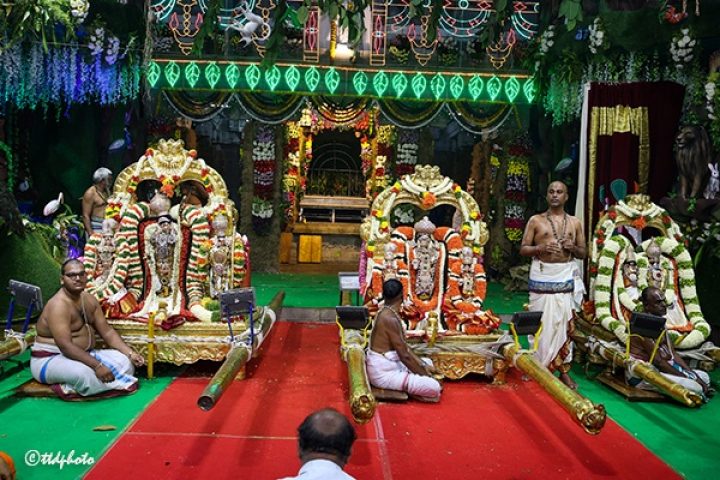
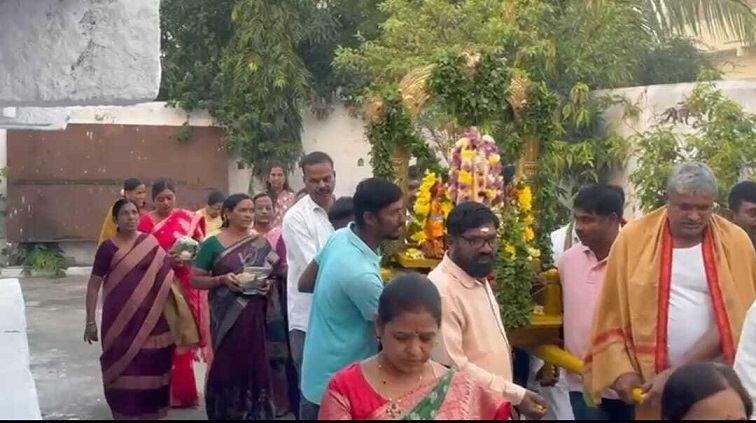
RAJANNA-SIRCILLA, DECEMBER 30, 2025: Sri Rukmini Satyabhama Sametha Venugopala Swamy temple in Thaduru village on the outskirts of Sircilla textile town celebrated the Vaikunta Ekadasi with religious fervour and gaiety on Tuesday.
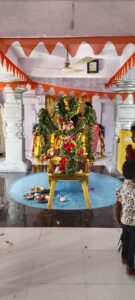
Devotees in large numbers witnessed the ritual of ‘Uttara Dwara Darshanam’ at the ancient and historic temple shrine constructed during the 13th century by the Kakatiya Dynasty. Special rituals of Maha Abhishekham, Pallaki Seva and Uttara Dwara Darshan (northern entrance of the temple) are also described as ‘Vaikunta Dwaram’.
Uttara Dwaram in the Yogic–Spiritual Perspective: An Inner Journey. Some doorways are built of stone…Some doorways exist hidden within our consciousness. The Uttaradwaram that devotees pass through on Vaikunta Ekadashi is one such symbol of an inner gateway.
According to yogic wisdom, Uttaradwaram is not merely a physical entrance in a temple—it represents a subtle spiritual doorway within the human body.
Yoga speaks of seven major chakras in the human body. Among them, the Ajna Chakra—located at the centre of the forehead between the eyebrows—is the most subtle. It is also known as the Third Eye.
In yogic symbolism, the Vaikunta Uttaradwaram is a reflection of the Ajna Chakra. Just as one enters the sanctum through the northern gate of a temple, when the Ajna Chakra opens, an inner journey into the depths of consciousness begins.

What Does Opening the Ajna Chakra Mean?
Opening the Ajna Chakra does not mean witnessing miracles or supernatural events. It means: Letting go of ego. Controlling desires. Cultivating deep concentration. Turning inward through meditation and mantra chanting.
In this state, one forgets the external world and begins to recognize one’s true inner nature. Union of the Individual Soul and the Supreme Soul. When the Ajna Chakra awakens, the mind becomes still.
At that moment, the individual soul (Jivatma) merges with the Supreme Soul (Paramatma).
Through this union: Karmic bonds loosen. The effects of past actions diminish. The cycle of birth and death weakens. This is what yoga refers to as the state of liberation (Moksha).
Vaikunta Ekadashi – A Call to Turn Inward
The fasting, chanting, and Uttaradwaram darshan performed on Vaikunta Ekadashi are symbolic practices. The true Vaikunta gate exists within us. The real darshan happens in our consciousness.
Even a few moments of silent meditation on this sacred day is equivalent to entering the true Uttaradwaram.
Vaikunta is not somewhere in the heavens—it exists within our inner being. Seeing an external doorway is a ritual. Opening the inner doorway is spiritual practice. May this Vaikunta Ekadashi become the beginning of an inward journey for all of us.
Uttarayana and Dakshinayana: The Philosophy behind Punya (Merit). In Hindu thought, time is not measured merely by clocks. Time itself is considered a living force that influences our thoughts and actions.
That is why scriptures say:
Good deeds performed during Uttarayana yield greater spiritual merit. Actions during Dakshinayana serve a different spiritual purpose
What Is Uttarayana?
Uttarayana is the period when the Sun appears to move from south to north, from Makara Sankranti to Karka Sankranti. This movement is not only astronomical—it symbolizes the upward movement of spiritual energy within us.
Uttarayana in the Bhagavad Gita. In Chapter 8 of the Bhagavad Gita, Lord Krishna says: Those who depart during fire, light, daytime, the bright fortnight, and Uttarayana attain Brahman.
This signifies: Uttarayana = knowledge, light, spiritual ascent. Japa, penance, charity performed during this period guide the soul toward liberation.
Yogic Interpretation
According to yoga: Uttarayana represents the upward flow of pranic energy. Energy rises from the Muladhara Chakra to the Sahasrara Chakra. Therefore: Meditation becomes easier. The mind remains in a sattvic state. Spiritual practices yield deeper results. The same act, when performed during Uttarayana, bears quicker and more profound spiritual fruit.
Devayana and Pitriyana
Scriptures divide time as: Uttarayana → Devayana (path of the gods, spiritual upliftment).
Dakshinayana → Pitriyana (ancestral rites and karmic purification)
Thus: Charity, vows, and yagnas flourish in Uttarayana. Shraddha and ancestral rituals are best in Dakshinayana…