Authored Article By Dr.S.L.N.T.Srinivas (Professor Cooperation)
NEW DELHI, JANUARY 03, 2026: The year 2025 will be remembered as a defining chapter in India’s cooperative history. What unfolded during this year was not incremental reform, but a decisive transformation—driven by strong political will, institutional collaboration, and a clear national vision led by the Ministry of Cooperation, Government of India. Analysts and practitioners alike view 2025 as the year when cooperatives were repositioned as a central pillar of India’s inclusive and resilient economic model.
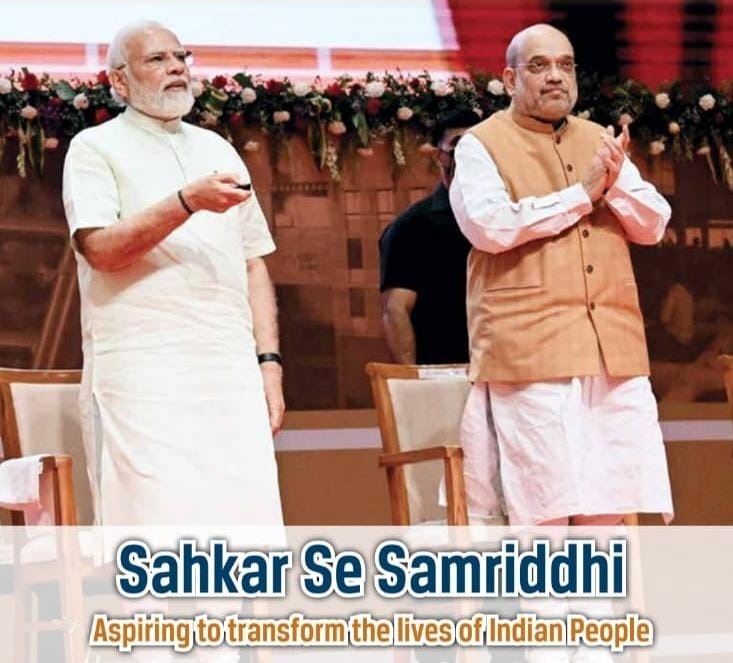
Anchored in the national mantra “Sahkar Se Samriddhi” (Prosperity through Cooperation), the cooperative movement moved beyond its traditional confines of rural credit and dairy, evolving into a diversified, technology-enabled, and people-centric ecosystem spanning villages, towns, and emerging urban sectors.
A Long-Term Vision Takes Shape
At the core of this resurgence lies the National Cooperative Policy 2025, formally unveiled in July 2025 under the leadership of Union Home Minister and Minister of Cooperation Amit Shah. Designed as a 20-year roadmap, the policy addresses long-standing structural constraints—outdated legal frameworks, governance gaps, limited capital access, and low digital penetration—while charting a future-ready course for cooperatives across agriculture, dairy, fisheries, housing, clean energy, tourism, and services.
The policy emphasises democratic governance, professional management, youth participation, women’s inclusion, and digital integration, ensuring cooperatives remain both member-driven and economically competitive.
Grassroots Expansion with National Scale
Building on the momentum of the International Year of Cooperatives (IYC) 2025, the Ministry of Cooperation advanced an ambitious goal: at least one viable cooperative in every village. By the latter half of 2025, this translated into the registration of over 30,000 new cooperative societies nationwide, supported by institutions such as NABARD, NDDB, and NFDB.
Primary Agricultural Credit Societies (PACS) were revitalised and reimagined as Multipurpose PACS (M-PACS)—offering not only credit but also agricultural inputs, storage, digital services, and welfare-linked activities. Membership drives in states like Uttar Pradesh reflected renewed public confidence, bringing farmers, women, and rural entrepreneurs back into the cooperative fold.
Financial Empowerment and Institutional Support
A major milestone came with the announcement by the National Cooperative Development Corporation of a ₹24,000 crore financial assistance programme, benefiting nearly 29,000 cooperative societies and over one crore members. Lower interest rates, customised credit products, and simplified access mechanisms significantly strengthened the financial backbone of cooperatives.
Complementing this, national-level events such as the Mega Cooperative Conference at Panchkula showcased the Government’s integrated approach—combining infrastructure creation, zero-interest loans for PACS, digital platforms, and cooperative bank strengthening under a single development vision.
Digital Cooperatives for a Digital India
Digitalisation emerged as a strong enabler in 2025. Thousands of cooperatives adopted UPI/QR-based payments, online accounting systems, and digital service delivery. PACS evolved into PM Kisan Samriddhi Kendras, while cooperatives began operating Jan Aushadhi Kendras, ensuring affordable medicines at the community level. These reforms reduced transaction costs, improved transparency, and aligned cooperatives with India’s broader digital economy.
Beyond Tradition: New-Age Cooperative Models
The Ministry of Cooperation also encouraged cooperatives to enter non-traditional sectors. The launch of cooperative-led ride-hailing platforms under the Bharat Taxi model introduced worker-owned alternatives in the gig economy. Similarly, proposals for Sahkari Insurance Services aim to deliver cooperative-based insurance solutions in health, agriculture, and life coverage—expanding social security through collective ownership.
Building Human Capital for the Future
Recognising that institutions are only as strong as the people who lead them, 2025 placed strong emphasis on capacity building. Training programmes for thousands of M-PACS members, enhanced youth outreach, and the expansion of cooperative education curricula have laid the foundation for a professionally managed, innovation-driven cooperative sector.
A New Benchmark for Cooperative Governance
While challenges remain—ranging from uniform implementation to safeguarding autonomy and depositor interests—the achievements of 2025 stand out for their scale, speed, and intent. The partnership between cooperatives and the Government has restored confidence, mobilised resources, and renewed the trust of farmers, depositors, women, and small entrepreneurs—the true stakeholders of the cooperative movement.
As 2025 draws to a close, India’s cooperatives stand stronger, broader, and more future-ready than ever before. With the Ministry of Cooperation at the helm, the spirit of “Government and Cooperatives Joining Hands” has elevated the sector to new pinnacles—positioning cooperatives as vital engines of rural prosperity, urban inclusion, and national economic resilience in India’s evolving growth story.