
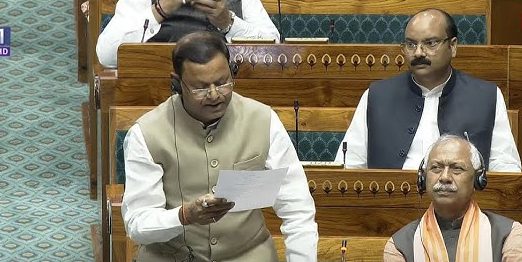
NEW DELHI, MARCH 24, 2026: Union Minister of State for Finance Pankaj Chaudhary informed the Lok Sabha that cooperative banks in India are functioning under a strengthened regulatory and supervisory framework designed to enhance transparency, accountability, and financial stability. The reforms, undertaken in coordination with the Reserve Bank of India and the National Bank for Agriculture and Rural Development, aim to insulate cooperative institutions from undue influence while ensuring sound governance practices.
The Minister highlighted key structural reforms, including amendments to the Banking Regulation Act, which cap the tenure of Board of Directors (excluding Chairperson and whole-time directors) at a maximum of 10 consecutive years to prevent concentration of power. Further, amendments to the Multi-State Cooperative Societies Act have introduced mechanisms such as the Cooperative Ombudsman for grievance redressal and the Cooperative Election Authority to ensure free and fair elections. On the regulatory front, the RBI has issued comprehensive guidelines on fraud management, including early warning systems and clear accountability frameworks, while the Prompt Corrective Action (PCA) framework ensures timely intervention in financially stressed cooperative banks.
Strengthening institutional resilience, the National Bank for Agriculture and Rural Development has implemented a Turnaround Plan (TAP) for State Cooperative Banks and District Central Cooperative Banks, focusing on governance reforms, cost efficiency, and technology adoption. Depositor confidence is further safeguarded through insurance coverage of up to ₹5 lakh provided by the Deposit Insurance and Credit Guarantee Corporation. Additionally, Risk-Based Internal Audit systems have been mandated for Urban Cooperative Banks to enhance internal controls and risk management. These comprehensive measures collectively aim to reinforce public trust, ensure financial discipline, and promote long-term stability in the cooperative banking sector.