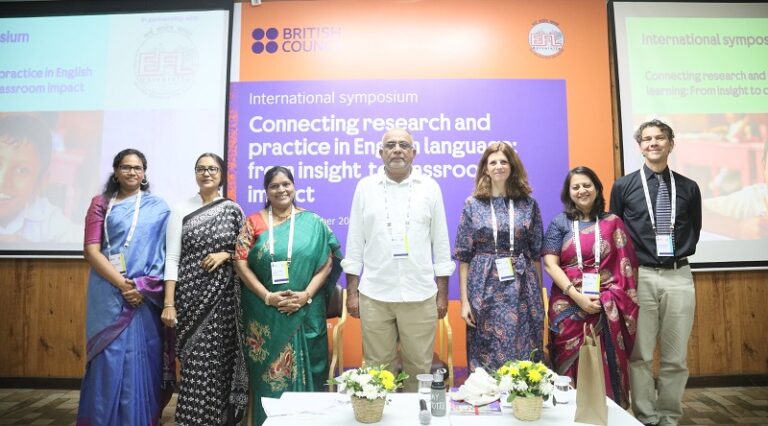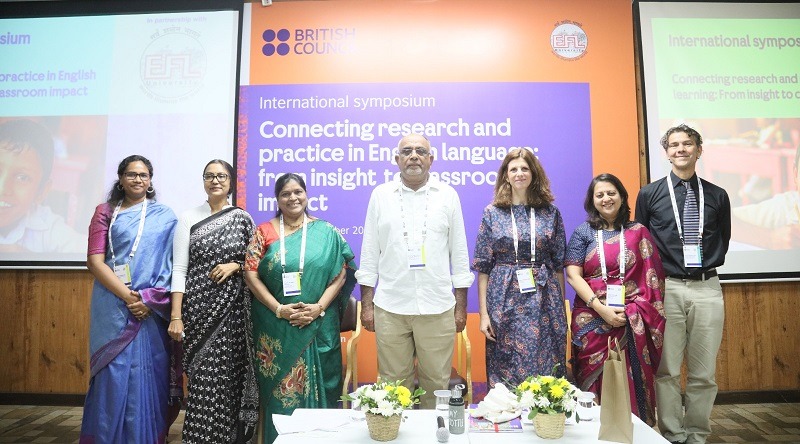
HYDERABAD, NOVEMBER 26, 2026: The English and Foreign Languages University (EFLU) and the British Council, the UK’s international organisation for cultural relations and educational opportunities, concluded a two-day international symposium, Connecting Research and Practice in English Learning: From Insight to Classroom Impact, in Hyderabad today. Held on 25-26 November 2026, the symposium brought together researchers, teacher educators, teachers, school leaders, representatives of educational institutions, and policy stakeholders from India and abroad to explore the evolving landscape of English teaching, learning, and assessment.
In his inaugural address, Prof. N. Nagaraju, Vice Chancellor of EFLU, emphasised the need to bridge academic research and classroom realities so that scholarly insights translate into meaningful learning outcomes. He highlighted the importance of ensuring that technology in education is used ethically and equitably, without displacing educators or widening existing divides, while recognising learners’ home languages as valuable resources for learning. Referring to the alignment with NEP 2020 and the India-UK Vision 2035, he welcomed the opportunity to bring researchers, teacher educators, and classroom practitioners into a shared dialogue. He encouraged participants to view the symposium as a collaborative laboratory for testing ideas and building lasting partnerships, invoking EFLU’s motto, “Words illumine the world,” as a guiding principle for fostering inclusive and equitable language education.
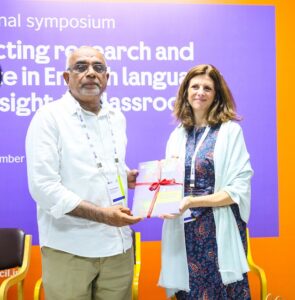
Alison Barrett MBE, Country Director India, British Council, said: “English education is evolving in response to changing learner needs, classroom realities, and the growing influence of technology. However, meaningful progress depends on ensuring that research and policy are translated into approaches that teachers can apply in their everyday practice. The symposium provided an important opportunity to bring together perspectives from across the education ecosystem, encourage dialogue among researchers, policymakers, and practitioners, and explore how evidence can inform more inclusive, responsive, and effective English learning. At the British Council, we remain committed to working with partners such as EFLU, educational institutions, and teachers to strengthen professional practice and support sustainable improvements in English education.”
Centred on bridging the gap between policy aspirations and classroom realities, the symposium underscored the importance of a whole-system approach to improving educational outcomes. Discussions highlighted the need to strengthen teacher and teacher educator capacity through enhanced skills, knowledge, and pedagogical flexibility, while also supporting language policy implementation, curriculum development, and teacher education institutions.

The programme was organised around five interconnected themes: inclusive and language-responsive teaching and learning; teachers, teacher education and evidence-informed practice; assessment for learning; human-centred AI and responsible innovation; and learner voice, communication and participation. Across these themes, participants examined how research and evidence can inform classroom practice, strengthen teacher development, and contribute to more equitable and effective learning environments.
The symposium featured a keynote address by Prof. Graham Hall, alongside sessions led by experts and practitioners including Prof. Padmini Shankar and Dr. Kshema Jose from EFLU, and Purbani Das from the British Council. Additional speakers included Dr. Gayathri Raman, Dr. Asma Rasheed, Dr. Madhumeeta Sinha, Dr. Padmini Boruah, Preeti Hingorani, and Dr. Vijaya, who shared insights on inclusive and multilingual learning, learner participation, teacher development, and evidence-informed practice.
Prof. Lina Mukhopadhyay, Coordinator of the Symposium at EFLU, thanked the University administration and the British Council for their fruitful collaboration and support in making the symposium a success. She also acknowledged the contributions of the speakers, delegates, and organising team whose collective efforts ensured the seamless conduct of the two-day event.
The symposium reflected the University’s commitment to connecting research with classroom practice, promoting multilingual and inclusive educational approaches, and nurturing national and international collaborations.
About the Author