The Mother Who Bestows Spiritual Attainments and Teaches Us the Art of Living
From Shailaputri, who teaches us stability, to Brahmacharini, who embodies patience and perseverance
From Chandraghanta, who gives us courage, to Kushmanda, who represents the creative power of the universe
From Skandamata, who teaches unconditional love, to Katyayani, who stands for justice; from Kalaratri, who helps us overcome fear, to Mahagauri, who represents purity — the Divine Mother reveals herself in nine beautiful forms during Navaratri.
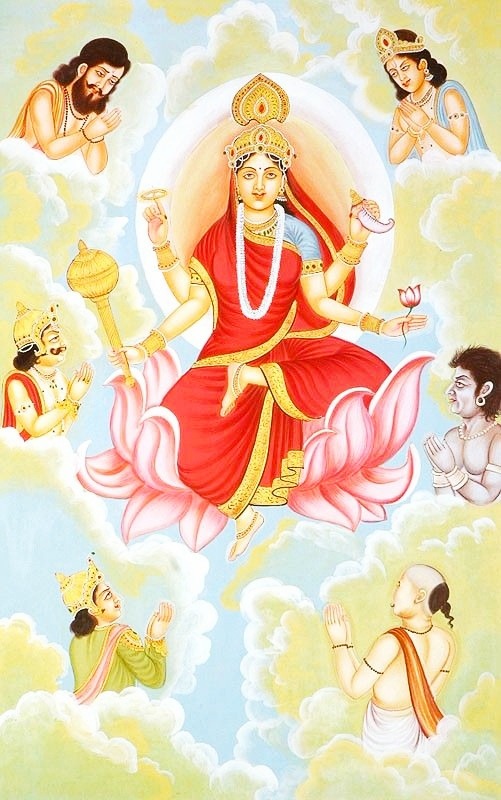
On the ninth day, we worship Mata Siddhidhatri, the giver of spiritual attainments, wisdom, and fulfilment.
But have we ever wondered why the Divine Mother reveals herself in so many different forms?
Is it only so that we can worship her in different ways?
Perhaps there is a much deeper message behind these forms.
The Mother is not merely a deity whom we worship in temples. Through her nine forms, she teaches us how to live, how to face difficulties, how to stand up for what is right, how to love others, and how to discover the strength that already exists within us.
Each form of the Mother carries a lesson for our lives. Each story reminds us of a quality we need to nurture within ourselves.
And the journey of Navaratri becomes truly meaningful when we begin to practise these lessons in our everyday lives.
Mata Siddhidhatri — The Source of All Divine Powers
According to Hindu spiritual traditions, before creation, the universe existed in a state of primordial emptiness. The Adi Parashakti, the Supreme Divine Mother, manifested her infinite power and brought the universe into existence.
She is regarded as the source of the energies that sustain creation, preservation, and dissolution.
Brahma performs the work of creation, Vishnu sustains the universe, and Shiva presides over dissolution. The divine power behind these cosmic functions is understood to be the Supreme Goddess herself.
She is Adi Shakti, the primordial energy.
She is Parashakti, the supreme divine power.
She is Tripurasundari, the radiant Divine Mother who represents the highest spiritual reality.
She is the universal Mother, present throughout creation and beyond it.
Everything is filled with Shakti. Everything is pervaded by the Divine.
This is the essence of the belief that the entire universe is an expression of the Supreme Goddess.
The Mother Who Bestows Siddhis
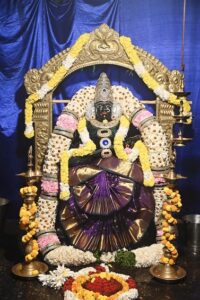
The name Siddhidhatri means the one who bestows siddhis, or spiritual attainments.
According to Hindu tradition, she grants the eight great siddhis, known as Ashta Siddhis.
They are:
- Anima — The ability to become infinitesimally small.
- Mahima — The ability to expand to an immense size.
- Garima — The ability to become extraordinarily heavy.
- Laghima — The ability to become extremely light.
- Prapti — The ability to attain or reach what is sought.
- Prakamya — The ability to fulfil one’s intentions.
- Ishitva — The power of mastery or divine authority.
- Vashitva — The ability to exercise control.
These are described as extraordinary spiritual powers in Hindu traditions. They can also inspire us to reflect on our own inner growth.
Overcoming our ego is an achievement.
Learning to control our senses is an achievement.
Remaining calm in difficult circumstances is an achievement.
Choosing the right path, even when it is difficult, is an achievement.
True fulfilment does not come merely from gaining power over others. It comes from understanding ourselves, overcoming our weaknesses, and becoming better human beings.
Mata Siddhidhatri reminds us that spiritual growth is not simply about what we acquire. It is also about who we become along the way.
Ardhanarishvara — The Unity of Shiva and Shakti
Another beautiful aspect of the Divine Mother’s glory is her inseparable relationship with Lord Shiva.
In Hindu spiritual traditions, Shiva and Shakti represent two inseparable aspects of the ultimate reality. Shiva symbolises pure consciousness, while Shakti represents the dynamic power through which that consciousness becomes active and expressive.
The form of Ardhanarishvara, in which Shiva and the Goddess share one body, beautifully expresses this unity.
It reminds us that consciousness and energy are not separate.
We can also understand this idea through our own lives.
An idea needs action to become a reality. Determination needs effort to produce results. Knowledge needs wisdom to guide our decisions.
Similarly, devotion becomes meaningful when we put its teachings into practice.
Worshipping the Divine Mother is not only about recognising her power outside us; it is also about understanding how that power can inspire our thoughts, decisions, and actions.
The Nine Forms of Durga — Nine Lessons for Life
The nine forms of Durga are much more than different manifestations of the Goddess. They offer us a beautiful way of understanding life.
Each form teaches us a quality that helps us face the challenges of being human.
- Shailaputri — Learn to Stand Firm
Shailaputri, the daughter of the mountain king Himavan, represents strength, stability, and a deep connection with nature.
Mountains remain firm through changing seasons and difficult weather. In the same way, we must learn to remain steady when life becomes challenging.
There will be moments when things do not go according to our plans. We may face disappointment, criticism, failure, or uncertainty.
During such times, we must not lose faith in ourselves.
Shailaputri teaches us that circumstances may change, but our inner strength and determination can keep us grounded.
Her message is simple: Stand firm, even when life becomes difficult.
- Brahmacharini — Patience and Perseverance Lead Us Forward
Brahmacharini represents devotion, discipline, patience, and unwavering determination.
Her story reflects the intense penance undertaken by Parvati to attain Lord Shiva as her consort.
Her journey reminds us that meaningful goals require dedication and perseverance.
We often expect immediate results. When things take longer than expected, we become discouraged or begin to doubt ourselves.
But real growth takes time.
Whether we are pursuing an education, building a career, nurturing relationships, or working towards a personal dream, we must learn to be patient with the process.
Brahmacharini teaches us that every sincere effort matters, even when the results are not immediately visible.
Her message is this: Stay committed to your path, trust your efforts, and do not give up simply because success takes time.
- Chandraghanta — Find the Courage to Stand Up for What Is Right
Chandraghanta represents courage, strength, and the determination to protect righteousness.
Life sometimes places us in situations where remaining silent feels easier than speaking up.
We may hesitate to express our opinions, defend someone who is being treated unfairly, or stand up for our own dignity because we fear criticism or rejection.
But courage does not mean living without fear.
It means doing what is right even when we feel afraid.
Chandraghanta reminds us to face challenges with confidence, protect our self-respect, and stand up for justice when necessary.
Her message is this: Do not allow fear to silence your conscience. Stand up for what is right with courage and wisdom.
- Kushmanda — Create Light Even in Darkness
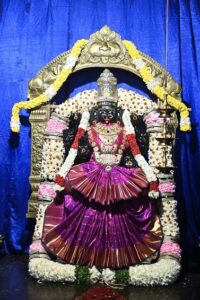
Kushmanda represents the creative power of the universe. She is traditionally associated with bringing light and life into the cosmic darkness.
Her form carries a beautiful message for our everyday lives.
There will be times when we feel surrounded by uncertainty, disappointment, or hopelessness.
During such moments, it is easy to focus only on what has gone wrong.
But sometimes, what we need is not to wait for the entire situation to change. We need to take one small step towards making things better.
A new idea, a positive decision, or a sincere effort can open a new path.
Kushmanda reminds us that we all have the ability to create something meaningful, even in difficult circumstances.
Her message is this: Instead of waiting for the darkness to disappear, find the courage to light a lamp of your own.
- Skandamata — Love Is Also a Form of Strength
Skandamata, the mother of Lord Skanda, represents maternal love, compassion, and protection.
A mother’s love gives a child comfort, confidence, and a sense of security.
Through this form, the Divine Mother reminds us of the importance of caring for others.
Listening to someone who is struggling, encouraging a person who has lost confidence, standing beside a friend in difficult times, or celebrating another person’s success are all expressions of love.
Love is not limited to beautiful words or affectionate gestures.
Sometimes, love means taking responsibility. Sometimes, it means being patient. Sometimes, it means simply staying beside someone when they need us most.
Skandamata teaches us that kindness is not weakness. It is a powerful quality that can bring hope and strength into another person’s life.
Her message is this: When you help someone feel loved, supported, and valued, you bring a little of the Divine Mother’s compassion into the world.
- Katyayani — Have the Strength to Challenge Injustice
Katyayani represents courage, righteousness, and the destruction of evil.
Her form reminds us that we do not have to accept every injustice silently.
There are times when we must stand up for our rights, protect our dignity, and speak for those who cannot easily speak for themselves.
However, standing up for what is right does not mean reacting with anger to every disagreement.
True strength lies in understanding the situation, choosing the right response, and acting with courage and wisdom.
Katyayani teaches us to recognise the difference between unnecessary conflict and the need to defend what is right.
Her message is this: Stand up for justice, protect your dignity, and let wisdom guide your courage.
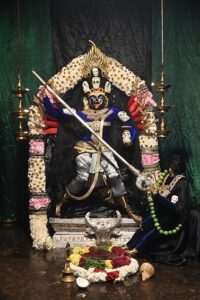
- Kalaratri — Face Your Fears Instead of Running Away
Kalaratri is one of the most powerful and fierce forms of Goddess Durga.
Her dark and formidable appearance represents the destruction of evil and the removal of fear. Although her form appears terrifying, she is also known as Shubhamkari, the one who brings auspiciousness.
Her story reminds us that the things that frighten us are not always things we must run away from.
Sometimes, our greatest fears arise from uncertainty about the future, fear of failure, concern about what others might think, or the possibility of losing something important to us.
Fear can prevent us from taking opportunities, expressing ourselves, and moving forward.
Kalaratri inspires us to face these fears rather than allowing them to control our lives.
Her message is this: Even when darkness surrounds you, remember that you have the courage to take the next step.
- Maha Gauri — Protect the Goodness Within You
Maha Gauri represents purity, peace, serenity, and spiritual clarity.
Her form reminds us that life’s difficulties should not make us lose the goodness within ourselves.
People may disappoint us. Situations may test our patience. Sometimes, we may even feel that kindness is not appreciated.
But we must not allow these experiences to turn our hearts bitter.
Purity is not merely about external cleanliness. It is also reflected in our thoughts, words, intentions, and actions.
It means choosing honesty over deception, compassion over cruelty, and understanding over unnecessary hatred.
Being kind does not mean allowing others to take advantage of us. We can maintain our boundaries and protect our dignity while remaining compassionate.
Mahagauri teaches us to preserve our values even when life tests us.
Her message is this: Let life’s experiences make you wiser, but do not let them take away your goodness.
- Siddhidhatri — Discover the True Meaning of Fulfilment
On the ninth day of Navaratri, we worship Mata Siddhidhatri, who represents spiritual attainment, wisdom, and fulfilment.
Her form brings the journey of Navadurga to a meaningful conclusion.
After learning stability, patience, courage, creativity, love, righteousness, fearlessness, and purity, we arrive at the importance of wisdom and inner growth.
Success is important, but success alone cannot make our lives complete.
We also need humility to remain grounded, compassion to understand others, and wisdom to use our abilities responsibly.
No matter how much we learn, there is always more to understand.
No matter how successful we become, we must never forget to respect others.
And no matter how many difficulties we overcome, we should remain willing to learn from our mistakes.
Siddhidhatri reminds us that true accomplishment is not simply about reaching a destination. It is about becoming wiser, more compassionate, and more conscious of our actions along the way.
Her message is this: True perfection is not about becoming superior to others; it is about becoming a better version of yourself.
The Nine Forms Are Within Us Too
Let us pause for a moment and reflect on these nine forms.
When life becomes difficult, we need the stability of Shailaputri.
When our goals seem distant, we need the patience of Brahmacharini.
When we are afraid to speak up, we need the courage of Chandraghanta.
When everything seems hopeless, we need the creativity of Kushmanda.
When someone needs our support, we need the compassion of Skandamata.
When we witness injustice, we need the strength of Katyayani.
When fear holds us back, we need the fearlessness of Kalaratri.
When life tests our values, we need the purity of Mahagauri.
And when we seek fulfilment, we need the wisdom and humility represented by Siddhidhatri.
These qualities are not meant to remain only within the stories we hear during Navaratri.
They are qualities we can cultivate through our everyday choices.
Every time we choose patience over frustration, courage over fear, kindness over cruelty, or wisdom over impulsive reactions, we take a small step towards becoming better human beings.
In this way, Navaratri becomes more than a nine-day festival. It becomes a journey of self-discovery.
Is the Divine Mother Outside Us, or Within Us Too?
When we enter a temple and stand before the Goddess, something within us often becomes quiet.
For a few moments, we set aside our worries. We close our eyes, offer our prayers, and ask the Mother to guide us.
We pray for strength when we feel weak, peace when our minds are troubled, and clarity when we do not know which path to take.
But what happens when we leave the temple?
Can we carry that peace into our homes?
Can we remember that courage when we face a difficult situation?
Can we practise the compassion we seek from the Mother when someone around us needs understanding?
Can we act with honesty and wisdom when we have to make an important decision?
Perhaps this is where devotion becomes a living experience.
When we pray to the Mother for courage, we must also learn to act courageously.
When we pray for peace, we must try to bring peace into our words and actions.
When we ask for wisdom, we must remain willing to learn from our mistakes.
When we seek her compassion, we must also learn to understand the suffering of others.
And when we pray for success, we must be ready to put in the effort required to achieve our goals.
The Mother may be worshipped in the temple, but the values she represents can accompany us everywhere.
Her strength can inspire our determination. Her compassion can guide our relationships. Her wisdom can influence our decisions. Her fearlessness can encourage us to face life’s challenges.
In the Hindu tradition, all these expressions of power ultimately point towards the Divine Mother, the source of Shakti.
To recognise the Mother within is to awaken the courage, compassion, wisdom, and strength that help us live with greater purpose.
The Deeper Meaning of Worship
During Navaratri, we decorate the Goddess, offer flowers, light lamps, chant mantras, and perform rituals with devotion.
These practices are beautiful expressions of our faith.
But the deeper meaning of worship lies in allowing that devotion to transform the way we live.
If Shailaputri teaches us stability, let us practise it when life becomes uncertain.
If Brahmacharini teaches us perseverance, let us continue working towards our goals.
If Chandraghanta teaches us courage, let us not remain silent when something truly needs to be said.
If Kushmanda teaches us creativity, let us look for possibilities even in difficult situations.
If Skandamata teaches us love, let us become a source of comfort and encouragement to others.
If Katyayani teaches us righteousness, let us stand up for what is fair.
If Kalaratri teaches us fearlessness, let us face our challenges rather than allowing fear to control us.
If Mahagauri teaches us purity, let us protect our honesty and goodness.
And if Siddhidhatri teaches us wisdom, let us continue growing without allowing pride to take over our hearts.
When we begin to live by these values, the lessons of Navaratri become part of our everyday lives.
Every difficult situation becomes an opportunity to practice courage.
Every relationship becomes an opportunity to practice love.
Every mistake becomes an opportunity to learn.
Every act of kindness becomes an opportunity to express compassion.
And every day becomes another step towards inner growth.
Conclusion — The Mother Shows Us the Way
The journey from Shailaputri to Siddhidhatri reminds us of a beautiful truth.
Although the Divine Mother appears in nine different forms, the divine energy underlying them is one.
Through Shailaputri, she teaches us to remain grounded.
Through Brahmacharini, she teaches us patience and perseverance.
Through Chandraghanta, she teaches us courage.
Through Kushmanda, she teaches us to create light even in darkness.
Through Skandamata, she teaches us the power of love.
Through Katyayani, she teaches us to stand up for righteousness.
Through Kalaratri, she teaches us to overcome fear.
Through Mahagauri, she teaches us to preserve our purity and goodness.
And through Siddhidhatri, she teaches us to seek wisdom, humility, and spiritual fulfilment.
The Mother shows us the path, but we must walk it ourselves.
She reminds us of our strength, but we must learn to use it wisely.
She inspires us through her stories, but we must bring their lessons into our everyday lives.
Worshipping the Mother is an expression of devotion. Living by the values she teaches us is one way of giving that devotion a deeper meaning.
Perhaps the greatest blessing we can receive during Navaratri is not simply the fulfilment of our wishes, but the wisdom to understand ourselves, the courage to face life, and the compassion to make the world around us a little better.
The Divine Mother is the inspiration behind our inner strength, the guiding light of our spiritual journey, and the eternal source of Shakti.
May we recognise her not only in the sacred image before us but also in every act of courage, every expression of love, every moment of wisdom, and every effort to do what is right.
Sarvam Shaktimayam… Sarvam Devimayam…
Everything is an expression of Shakti. Everything is pervaded by the Divine Mother.
Om Devi Siddhidatryai Namah!
About the Author