Telangana needs a comprehensive policy to restore abandoned granite quarries as safe water resources, green spaces and ecological habitats.
Public safety and land restoration must become measures of progress alongside mineral revenue.
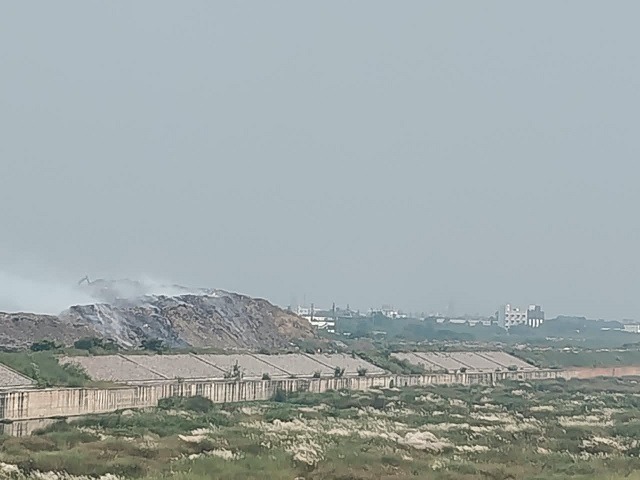
KARIMNAGAR, OCTOBER 17, 2026: The sight and smell of the garbage dumping yard on the outskirts of Karimnagar town is posing a serious threat to the residents due to the emanation of toxic gases and causing health and environmental issues.
The shifting of the garbage dumping yard to other localities is also being opposed by the villages of Huzurabad due to environmental issues. In spite of a series of agitations by the residents, the MCK or the authorities concerned are not taking any measures for the relocation of the dumping yard to any other location. Environmentalists suggest that the garbage can be dumped in the defunct and closed open granite quarries covered with mud, and used for plantation of saplings as the permanent solution.
When a hill is quarried, the consequences extend beyond the removal of granite. The ecological relationships sustained by that landscape are disturbed. Stone reaches the market. Revenue reaches the government and commercial enterprises. But once extraction ends, who takes responsibility for the pit left behind, the damaged terrain and the risks inherited by neighbouring villages? Development cannot indefinitely postpone its obligation to restore life to the land that generated its wealth.
Telangana should approach the restoration of exhausted and abandoned granite quarries as a matter of public policy. Suitable sites could become rainwater storage facilities, while others could support native vegetation and wildlife habitats. The objective should be to transform damaged and hazardous landscapes into safe, enduring community assets.
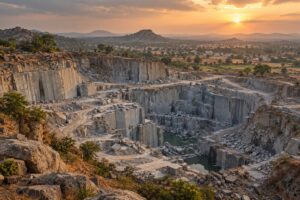

Such a programme, however, requires careful assessment. Every quarry cannot become a lake, every excavation need not be completely filled, and every vacant pit must not become a waste disposal site. The future of each location must be determined by its physical characteristics, ecological suitability and legal status.
The Uncounted Cost of Mineral Wealth
Mineral extraction contributes to employment, trade, transport and government revenue. Where safeguards are inadequately implemented, it can also generate dust and noise, alter natural drainage, remove vegetation and leave unstable rock faces. These impacts require site-specific assessment; the condition of one quarry cannot be assumed to represent all others.
Nor should all quarry land be presumed to belong to the government. Land ownership, lease rights, permissions and restoration obligations must be verified individually. An operating quarry, a temporarily inactive site and a permanently exhausted excavation require different administrative and technical responses.
The measure of development must therefore extend beyond the volume of stone extracted. It should also account for the land made safe and returned to productive or ecological use after extraction.
Burying Waste Does Not Resolve the Problem
Villages and towns need effective solutions to their growing waste burden. Filling quarry pits with mixed municipal waste, covering them with soil and planting trees cannot, however, be accepted as a routine method of restoration.
Rainwater passing through waste can produce a contaminated liquid known as leachate. Without adequate containment and treatment, it may enter the soil and move through fractures in rock into groundwater. Central Pollution Control Board guidance has specifically addressed the groundwater risks associated with the disposal of untreated waste in abandoned quarry pits.
Research by the National Geophysical Research Institute concerning proposed waste disposal in granite quarry pits near Hyderabad has likewise examined groundwater movement and the potential migration of leachate. An apparently solid rocky surface is therefore no assurance of environmental safety.
Quarries selected for water storage must be protected from waste dumping. Land intended for ecological restoration should not conceal mixed waste beneath a superficial layer of greenery. An engineered waste disposal facility, where legally permissible and specifically authorised, is a separate undertaking with its own safeguards and monitoring requirements.
The governing principle must be clear: scientific waste management and scientific land restoration are complementary responsibilities, each requiring its own appropriate methods.
A Restoration Plan for Every Quarry
The first requirement is a comprehensive inventory of exhausted and abandoned quarries. It should record their area, depth, slope stability, proximity to settlements, drainage patterns, existing contamination, ownership and the obligations of leaseholders.
This assessment can identify three broad restoration options.
Rainwater storage: Geologically suitable and uncontaminated quarries may be adapted to collect rainwater. Such projects require safe inflow arrangements, sediment control, provision for excess water discharge and protective barriers. Depending on water quality and applicable permissions, the stored water could support nurseries, vegetation and other local needs. Drinking-water use would require appropriate testing and treatment. Groundwater recharge must be assessed separately; the presence of stored water does not, by itself, establish that recharge will occur.
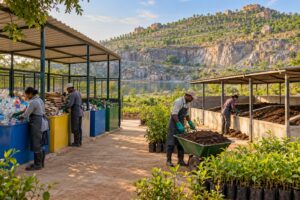
Land rehabilitation and vegetation: Suitable locations may be reshaped using clean excavated soil and other tested, permissible materials. Specialists must determine the appropriate filling levels, compaction, drainage and soil depth required for vegetation. In some locations, stabilising dangerous edges and creating graded or terraced slopes may be more practical than filling the entire excavation.
Water-linked ecological habitats: Where space and safety permit, a site could combine water storage with native trees, shrubs and grasses. Such restoration could provide habitat for birds, pollinating insects and small animals while improving the ecological value of disturbed land.
The Indian Bureau of Mines’ planning framework recognises restoration approaches such as backfilling, water reservoirs and green-belt development. Their application to granite quarries in Telangana must nevertheless be examined against the relevant State rules, site permissions and approved plans.
Restoring One Site Must Not Damage Another
Soil and sediment obtained through authorised tank desilting may offer opportunities for quarry rehabilitation. Their suitability must first be established through testing for contamination and characteristics relevant to plant growth. Where desilted material has agricultural value, farmers’ requirements should also inform its allocation.
Clean surplus soil from authorised construction and excavation projects may provide another source. However, excavating an undisturbed hill merely to fill a damaged quarry would undermine the environmental purpose of restoration.
Every consignment should have a documented source, quantity and, where required, test results. Without traceability, a restoration programme could become a route for the unauthorised disposal of mixed waste or industrial residues.
Waste Management Must Begin at Source
Quarry restoration should be accompanied by stronger waste segregation in villages and towns. Biodegradable waste should enter suitable composting or biogas systems. Recyclable materials should be directed to recognised recovery channels. Hazardous, biomedical and electronic waste require their respective specialised management systems.
Compost that meets applicable quality standards may be used, where suitable, to improve soils in restoration areas. Every residue emerging from a waste-processing facility must not automatically be classified as manure or clean fill.
This approach can deliver two related benefits: reducing the burden of unmanaged waste in settlements and making appropriate, quality-assured materials available for land rehabilitation.
Success Lies in Surviving Ecosystems
A restoration programme must continue well beyond its inauguration. Saplings that fail to survive their first summer cannot establish lasting green cover.
Plant selection should reflect local soils, rainfall and water availability. Native trees, shrubs and grasses should be considered together, while naturally regenerating vegetation should be protected. A multi-year maintenance plan must provide for watering where necessary, fire prevention, grazing management and replacement of failed planting.
The proposed creation of habitats for animals must also incorporate safety. Livestock should be prevented from entering deep water pits with steep sides. Separate, safely accessible drinking troughs may be appropriate where required. Habitat restoration should create conditions that birds and small animals can occupy naturally; indiscriminate introduction or release of animals would be inappropriate.
Performance should consequently be assessed through vegetation survival, soil stability, water quality and ecological recovery, rather than the number of saplings planted on a ceremonial occasion.
A New Environmental Asset for Telangana
A carefully implemented programme could yield substantial public benefits.
Protective barriers and stabilised quarry edges could reduce risks to people and livestock. Rainwater storage at suitable sites could supplement local supplies. Vegetation could help control soil erosion and dust, while restored areas could provide habitat within fragmented landscapes.
Nursery development, soil conservation, planting, maintenance, water testing and monitoring could create local employment. Women’s self-help groups and trained young people could participate through clearly defined responsibilities and appropriately structured work arrangements.
The government’s return would extend beyond direct revenue. Safer land, improved environmental conditions, useful water storage and stronger public confidence are valuable outcomes. These benefits should nevertheless be assessed realistically. Claims of substantial financial savings or assured income must be supported by project-level analysis of construction, transport, maintenance and monitoring costs.
Returning environmental benefits to communities that have borne the consequences of extraction would also strengthen the credibility of public administration.
Funding Must Follow Responsibility
The entire cost of quarry restoration should not automatically fall on the public exchequer. Authorities must first establish and enforce the obligations contained in relevant lease conditions, environmental permissions and approved plans. Public funding should not become a substitute for responsibilities that legally rest with an operator.
For eligible works, District Mineral Foundation funding may be examined. The priorities of the Pradhan Mantri Khanij Kshetra Kalyan Yojana include drinking water, environmental protection, pollution control and livelihood development. Any proposed expenditure must comply with the applicable guidelines and approval procedures.
Other eligible government programmes and corporate social responsibility contributions may provide additional support. Where funding sources are combined, transparent accounting must prevent duplicate payments for the same work.
Equally important, the institution responsible for maintaining the restored site must be identified before construction begins. An asset without a funded maintenance arrangement can quickly become another neglected liability.
Government Leadership and Youth Participation
Telangana could establish a proposed Quarry Land Restoration Programme, beginning with the identification and securing of hazardous sites. Representative locations across different geological conditions could then be selected for pilot projects. Expansion should follow an assessment of their safety, environmental performance, costs and maintenance requirements.
District-level coordination would be necessary among mining, groundwater, pollution control, forest, irrigation and local government authorities. Gram Sabhas, neighbouring farmers and affected households should be consulted. Ownership, access, community use and maintenance responsibilities must remain clear after restoration.
Young people can contribute far beyond participating in plantation events. They can help report hazardous locations from safe distances, identify unauthorised dumping, support nurseries, document plant survival and build public awareness. Hazardous site entry and technical operations must remain the responsibility of trained, authorised personnel.
Each project should publicly disclose the area restored, expenditure incurred, water-quality results, vegetation survival and the institution responsible for maintenance. The record should show what remains healthy after three years, alongside what was planted on the first day.
Returning Life to the Land
The income earned from a quarried hill appears in financial accounts. The vegetation lost, the risks transferred to nearby villages and the habitats destroyed often remain outside those accounts. Responsible governance must bring these consequences into the same assessment of development.
Restoration should create land capable of sustaining water, vegetation and life over time. A green surface cannot compensate for concealed pollution, unstable ground or neglected maintenance. Repairing an old environmental injury must not create a new one.
The government must turn the idea into policy. The administration must translate policy into sustained action. Young people and local communities must help make that action accountable and durable.
The hills have contributed to our wealth. Returning water, greenery and life to the land is how Telangana can begin to repay that debt.
About the Author