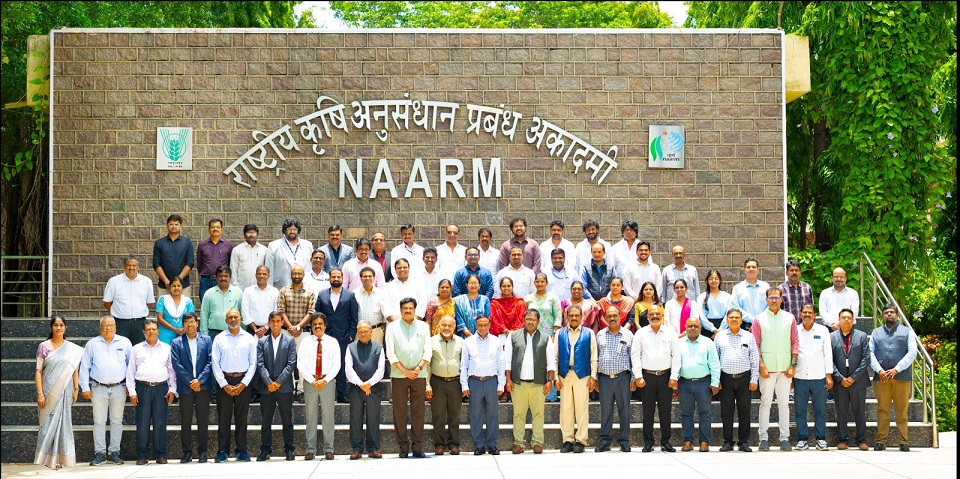
HYDERABAD, AUGUST 03, 2026: The National Flagship Consultation on the Blue Economy Policy Framework for Mariculture was inaugurated at ICAR-NAARM, Hyderabad, on Monday (August 3, 2026), marking the launch of the ANRF Prime Minister’s Early Career Research Grant (PM-ECRG) Project on developing an AI-enabled framework for Mariculture sector development.
Prof A. Biju Kumar, Vice-Chancellor, Kerala University of Fisheries and Ocean Studies (KUFOS), Kerala, who was the Chief Guest, highlighted the strategic importance of fisheries, aquaculture and Mariculture in India’s Blue Economy. He said these sectors have significant potential to accelerate economic growth, strengthen coastal livelihoods, promote entrepreneurship, enhance exports and contribute to food and nutritional security. He emphasised that the benefits of R&D must reach stakeholders through the translation of technologies into actionable products and solutions.
In his keynote address, Bijay Kumar Behera, Chief Executive, National Fisheries Development Board (NFDB), Hyderabad, emphasised that an AI-enabled Geospatial-Biological and Techno-Economic Fusion Intelligence Framework could play an important role in enhancing Mariculture productivity in the future.
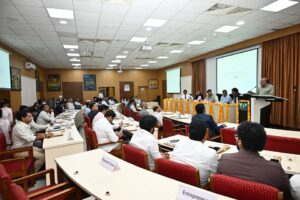
He stressed the need to address the fragmentation of critical information relating to biological suitability, environmental conditions, carrying capacity, economics, infrastructure, markets and investment risks. He also highlighted the importance of strengthening seed production to support the growth of mariculture.
Prof. Gnana Prakash, Vice-Chancellor, P.V. Narsimha Rao Veterinary University (PVNRTVU), Hyderabad, called for greater collaboration among fisheries universities and research institutions to bring about a meaningful transformation in the Mariculture sector. He urged the academic and scientific community to work collectively towards a common goal and strengthen institutional cooperation.
Dr. R.M. Sundaram, Director, ICAR-NAARM, said India is the world’s second-largest fish producer, with annual fish production of nearly 198 lakh tonnes, while marine product exports crossed ₹73,890.46 crore in 2025. However, he noted that India’s productivity in the sector remains lower compared with leading countries such as Norway, China and Japan. Highlighting the sector’s contribution to livelihoods across the value chain, he emphasized the need for sustainable and scientifically planned growth and expressed confidence that the project would help address key challenges confronting mariculture development.
Dr. Suresh Kumar Mojjada, Principal Investigator of the project, outlined the conception of the initiative and the process through which it received support under the ANRF PM-ECRG programme. He explained that the initiative is aligned with the national vision of Viksit Bharat 2047 and seeks to strengthen the Blue Economy as a strategic avenue for sustainable economic growth, employment generation, food and nutritional security, climate resilience and coastal prosperity.
Dr. Ganesh Kumar said that the signing of an MoU between ICAR-NAARM and KUFOS was a significant development that would create opportunities for knowledge enhancement and upskilling of fisheries students.
Earlier, Dr. L. Ranjith, Senior Scientist, ICAR-NAARM, welcomed the gathering. More than 100 participants, including Deans and Directors of fisheries universities, representatives of deep-tech and AI companies, entrepreneurs, farmers and officials from line departments across different states, attended the consultation in person. The meeting was also attended by 85 participants online.
About the Author