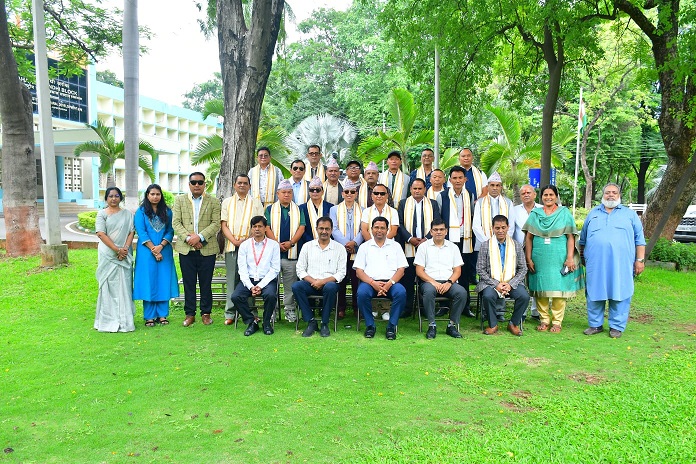
HYDERABAD, AUGUST 03, 2026: The National Institute of Rural Development & Panchayati Raj (NIRDPR), Hyderabad, on Monday commenced a training programme on Urban Governance for delegates from selected Urban Local Bodies of Nepal.
The India-Nepal Treaty of Peace and Friendship of 1950, that had formed the bedrock of the special relations, is continuously and encouragingly sustained by both the Nations through multiple multi-lateral forums such as BBIN (Bangladesh, Bhutan, India and Nepal) and SAARC (South Asian Association for Regional Cooperation) NIRDPR said.
The training commenced on Monday and ends on August 12, 2026. The Participants includes Mayors, Chairpersons, Acting Mayors, and members of Municipalities from four districts, namely Ilam, Panchthar, Taplejung and Tehrathum, from Koshi Province of Nepal.
Speaking at the inaugural session, Saketa Raja Musinipalli, Deputy Secretary, Ministry of External Affairs, emphasised a strong partnership between India and Nepal and highlighted development cooperation as a key pillar of their relationship. He underscored the importance of capacity building, particularly in human resource development with a focus on agriculture, horticulture, and areas of special interest as felt necessary by the delegation. He said the programme would surely be productive and beneficial to both the countries through sharing of experiences and lessons to be learnt through the programme.
He reaffirmed India’s commitment to fostering further collaboration through focused training programmes and exchange of visits. Dr Jyothis Sathyapalan, Professor, CPGS, NIRDPR gave the Special address to the participants. Dr. Anjan Kumar Bhanja, Associate Professor & Head of CPRDPSSD, NIRDPR explained the design and objectives of the training programme and also requested the delegates to share their expectations from the programme.
The delegates communicated that they want to visit and understand the good practices in a few urban local bodies in the areas of governance, Localisation of Sustainable Development Goals(LSDG), Globalisation, Agriculture, Horticulture, Sewage and Urban Waste Management and Eco-Tourism, infrastructure, Technology, among other relevant subjects. Dr. Bhanja briefed that these are precisely what have been captured in the training design. He also stated that the delegates would be taken to Maharashtra, Tamil Nadu and Hyderabad to expose them to the sites of good practices.
The delegates added that they want to learn a lot from the good practices and replicate them in their own areas to the extent possible. Shri. Manoj Kumar, Registrar & Director of Admin, communicated the importance of Urban Governance and effective planning of the Outstation visits by the Course Director. Last but not least, Dr. Pranab Kumar Ghosh wished the participants all the very best and asked them to visit the eco-friendly campus and green environment established at NIRDPR.
About the Author