Participants come together to provide actionable recommendations on child adoption
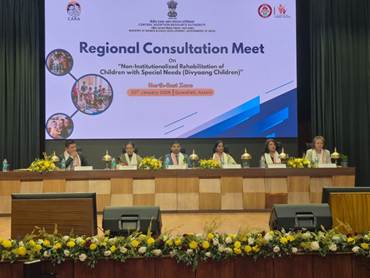
GUWAHATI, JANUARY 30, 2026: The Central Adoption Resource Authority (CARA), under the Ministry of Women and Child Development, Government of India, successfully organised a Regional Consultative Workshop on “Promoting Non-Institutionalised Rehabilitation of Children with Special Needs (Divyaang Children)” today (30th January 2026) in Guwahati, Assam.
The day-long consultation witnessed participation of 122 stakeholders, including representatives from State Adoption Resource Agencies (SARAs), Specialised Adoption Agencies (SAAs), District Child Protection Units (DCPUs), Chief Medical Officers, health professionals, child protection functionaries, and adoption practitioners from across the region. The large turnout reflected growing institutional commitment towards strengthening adoption and rehabilitation mechanisms for children with special needs.
The workshop commenced with an overview of CARA’s initiatives aimed at promoting family-based care for children with special needs, followed by the screening of a film showcasing the successful adoption of children with special needs. Further in the program, representatives from each state shared their respective insights on existing challenges, best practices, and innovative approaches being undertaken to facilitate adoption and non-institutional care.

A group discussion was also organised to bring out recommendations spanning specific subjects which were provided to the representatives beforehand. The deliberations were structured on the following subjects:
• Health and medical assessment of children with special needs
• Legal and procedural aspects of adoption
• Financial and administrative challenges
• Grievance redressal and institutional coordination
Each group presented actionable recommendations aimed at strengthening identification, certification, counselling, placement, and post-adoption support mechanisms. The workshop deliberated on strategies regarding the adoption of children with special needs. Emphasis was laid on enhancing inter-sectoral coordination, building capacities of frontline functionaries and promoting informed decision-making among prospective adoptive parents.
The consultation concluded with a collective resolve to develop a strategic roadmap for promoting domestic adoption of Divyaang children, strengthening non-institutional care mechanisms and intensifying awareness efforts during Adoption Awareness Month.
CARA reaffirmed its commitment to ensuring that every child, irrespective of physical or developmental challenges, grows up in a safe, nurturing, and permanent family environment, and that adoption continues to be guided by the principles of child welfare, transparency and the best interest of the child.
About the Author