IGNCA organised a special exhibition titled ‘Stars Shine in Ads: a Unique Ad Exhibition
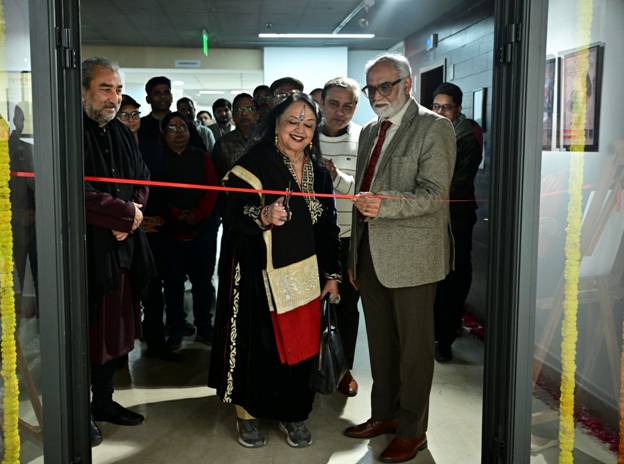
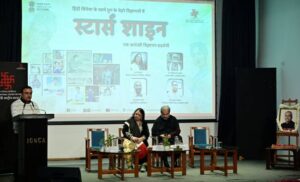
NEW DELHI, DECEMBER 17, 2025: Media Centre of the Indira Gandhi National Centre for the Arts (IGNCA), an autonomous institution under the Ministry of Culture, Government of India, organised a special exhibition titled ‘Stars Shine in Ads: a Unique Ad Exhibition’ here at Samvet Auditorium. The exhibition was inaugurated by Rama Pandey, film and theatre director and author; Sachchidanand Joshi,Member Secretary, IGNCA; and Sushil Pandit, communication strategist. Anurag Punetha, Controller, Media Centre, delivered the inaugural address. The exhibition is curated by Iqbal Rizvi of Media Centre, IGNCA. A panel discussion on the subject was also organised as part of the event.
Moving beyond the world of cinema, the exhibition reflected on the decisive role advertising played in bringing cinematic personalities into the fabric of everyday life. Film stars had shaped public taste, fashion, and aspiration, and the trust they inspired made them central to the evolution of Indian advertising. Their association with products marked an important phase in India’s visual and cultural history, revealing how popular imagery and commercial communication together influenced social memory and consumer culture. It is fitting that we pause to pay tribute to the legendary Late Piyush Pandey, whose contribution to the world of advertising reshaped the language, imagination, and cultural resonance of Indian communication.
On this occasion, Rama Pandey said, “The world of advertising should not be seen merely as a realm of emotions or the language of the market. It is, in itself, a new, vibrant, and contemporary form of literature.” Just as poetry conveys deep emotions in a few words, stories give meaning to ordinary life, and drama connects human beings through dialogue, advertising too communicates with society through a few lines, some visuals, and fleeting moments.
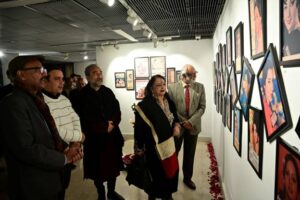
The purpose of advertising is not merely to sell a product; it builds trust, a sense of belonging, and relationships in the minds of consumers. When advertising is presented in the language of the common person, connecting with their experiences, memories, and life, it transcends the boundaries of the market to become a cultural document. This is why many advertisements remain etched in our minds for years—they make us smile, compel us to reflect, and often come to define the spirit of their time.
Today, as mediums rapidly evolve—from radio to television, from print to digital and mobile screens—the challenges and responsibilities of advertising have grown. In such times, preserving, archiving, and understanding the journey of advertising becomes essential, for it represents not only the history of brands but also the evolving nature, aspirations, and cultural fabric of society. This exhibition offers an opportunity to view advertising as a creative and intellectual form—a medium born of emotion, shaped by language, and, like literature, establishing its significance over time.
On this occasion, Sushil Pandit said, “While understanding his life and work, years ago, when I wrote for the Indian Express and later for The Telegraph, I realised deeply that advertising is not merely a medium to sell products—it has always reflected the social, cultural, and economic changes of its time.”
He noted, there was a time when newspapers sold for one or one and a half rupees, and even that price did not cover the cost of printing. In such circumstances, the true power sustaining print media was advertising. The freedom of journalists, the continuity of writing, and the very existence of newspapers and magazines depended on it. Advertising not only supported the news industry but also gave sustenance to literature, poetry, and cultural discourse. From the era of radio and newspapers to the advent of television, advertisements became an integral part of everyday life and gradually embedded themselves in collective memory.
Mr Pandit highlighted, “Piyush Pandey’s greatest contribution was transforming the language of advertising from formalities into a simple, intimate style of everyday conversation. It was the kind of language that fosters trust, like a dialogue between friends, speaking to consumers as equals.” He further emphasised, “Technology, products, and facilities can change over time and can even be replicated, but the emotional bond between a brand and its consumer is intangible—it cannot be reproduced. The true power of advertising lies in building this relationship, which goes beyond mere necessity to create desire, loyalty, and trust. Reflecting on the digital era, he said, “Today, the mediums of advertising have changed, and communication has become more targeted, but challenges have also grown. The language, aspirations, and worldview of the new generation are different. To connect with them, it is essential to understand that communication is not just about what is said, but equally about how it is said.”
Concluding his remarks, Pandit said, “This exhibition offers an opportunity to understand the long journey of Indian advertising, which has shaped consumer culture, creative expression, and social behaviour. I congratulate the organisers for this endeavour, as it is difficult to chart the direction of the future without understanding the past.”
On this occasion, while delivering his inaugural address, Shri Anurag noted that IGNCA’s advertising archiving initiative is dedicated to enriching and expanding this valuable visual record. Through this exhibition, the initiative not only preserves advertisements but also creates a structured archive of India’s creative marketing journey—its aesthetics, language, humour, social impact, and nostalgia. Advertising students, researchers, enthusiasts, and audiences were present on the occasion.
About the Author